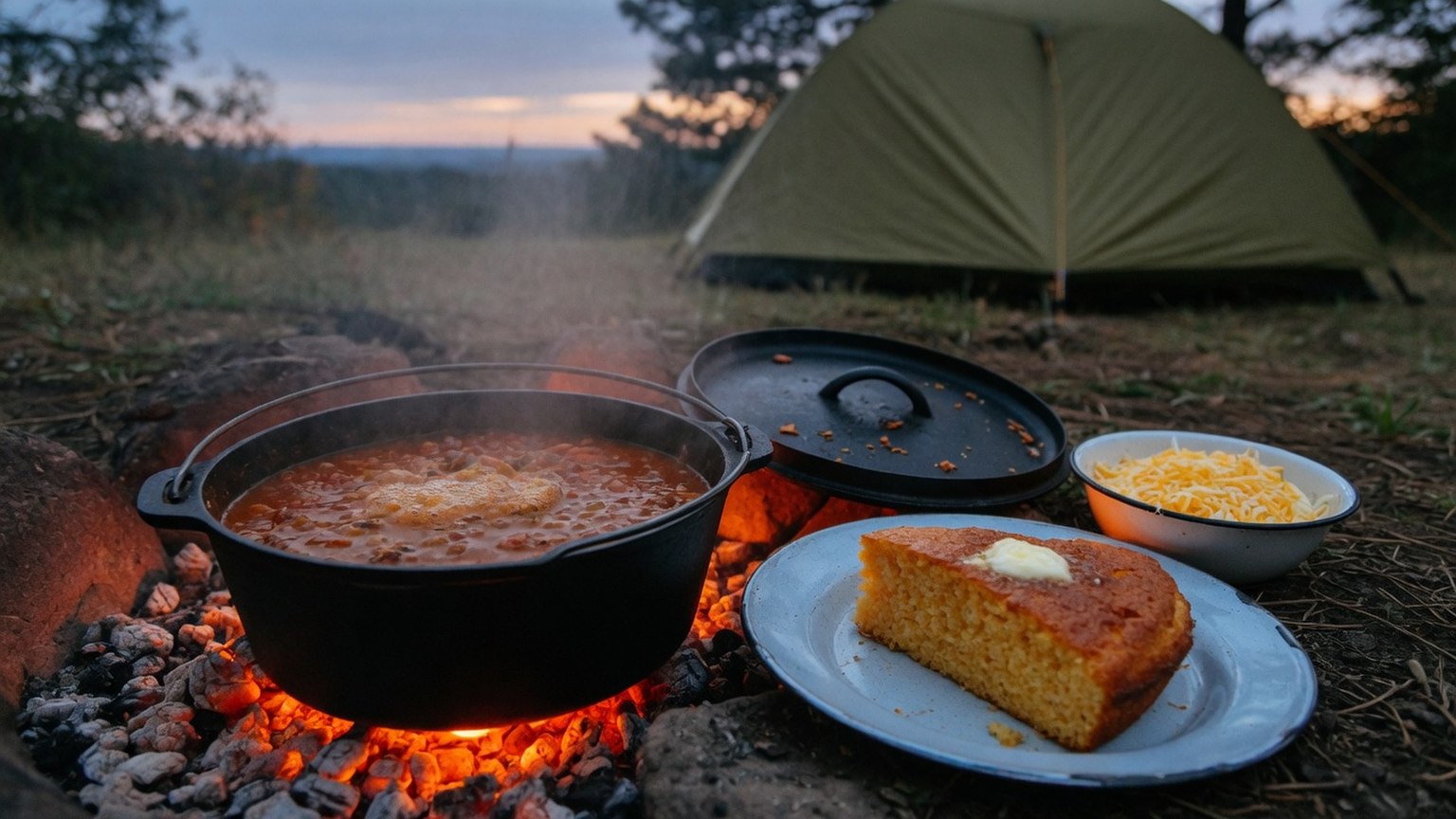
There is a moment on every fall camping trip when the sun drops behind the trees, everyone’s hands are cold, and the last thing anyone wants to do is babysit a complicated dinner. That is when we reach for potatoes. A pile of campfire baked potatoes, split open and loaded with whatever everyone loves, feeds a crowd, asks almost nothing of the cook, and turns a chilly evening into the meal people talk about on the drive home.
This is not a sad foil-wrapped afterthought. With the right potato, a proper bed of coals, and a seasonal toppings bar, baked potatoes can carry the whole dinner — and if the evening runs late, they simply wait in the coals while you enjoy the fire.
Why Baked Potatoes Work So Well at Camp
Potatoes are cheap, sturdy, and happy at room temperature, so they do not compete for cooler space. They travel without bruising, need no marinade, and cook in the same fire you are already tending. One bag of russets can feed six people for less than a single steak.
They are also unusually flexible for a group. Someone does not eat meat? Their potato works. A kid will only eat cheese? Their potato works. Set out a dozen toppings and everyone builds dinner their own way. And in fall, a hot potato with something rich on top simply fits: warm in your hands, good with cider or a dark beer, and easy to eat around a fire.
Start With the Right Potato
Russets are our first choice. Their thick skins and fluffy interiors hold up to the dry heat of coals, and they split into the steamy crumb that makes a good toppings vehicle. Yukon Golds work too, though they come out denser and creamier. Save waxy potatoes for potato salad.
Choose potatoes of similar size so they finish together. Scrub them well and dry them thoroughly at home, prick each one a few times with a fork, then rub the skins with a little oil and coarse salt. That coat gives you a skin worth eating instead of a soggy jacket you peel off and toss.
If you are still building out your camp kitchen, our guide to essential camp fire cooking equipment covers the tools that earn their space.
How to Bake Potatoes in the Coals
Build the fire early. You want a deep bed of glowing coals, not leaping flames, so start it about an hour to ninety minutes before you plan to eat, let it burn down, then spread the coals into a flat layer roughly the size of your potato cluster.
Nestle the potatoes directly into the coals, then rake a thin layer over the top. Turn them every fifteen to twenty minutes with long tongs, rotating both the potatoes and their position so they cook evenly.
A medium russet usually takes forty-five to sixty minutes in a good coal bed. The reliable test is the squeeze: pick one up with a heatproof glove and press firmly. If it gives easily all the way through, it is done. Any resistance in the center means another ten minutes.
Foil or No Foil?
Both work. Foil traps steam, keeps ash off the skin, and simplifies cleanup, but the skin comes out softer. Baking bare gives you a drier, saltier skin with real campfire flavor, though you will need to brush off ash. Our compromise is foil for the first half, then unwrapped for the last fifteen minutes to firm up the skin. In gusty or very hot conditions, foil is the safer choice.
No Coals? Use a Grate or a Dutch Oven
A covered grill or a grate over a steady fire works well. Cook over medium coals, turning every ten minutes, for about an hour. In a Dutch oven, set the potatoes on a trivet with a splash of water, cover, and use coals underneath and on the lid; they steam-bake in roughly fifty minutes and stay warm in the pot.
If potatoes are a side rather than the star, our foil packet potatoes on the grill are a faster, crispier option.
Build a Fall Toppings Bar
Set everything out before the potatoes finish so nobody digs through a cooler while dinner cools. A folding table, a few shallow bowls, and a stack of plates are all you need.
- Warm chili, homemade or a good canned version doctored with extra onion and cumin
- Steamed broccoli and a sharp cheddar sauce, which turns a potato into a proper vegetarian dinner
- Caramelized onions and mushrooms cooked at home and reheated in a skillet
- Pulled pork, leftover brisket, or crumbled sausage for the meat eaters
- Sour cream, butter, chives, and plenty of salt and pepper
- Roasted squash, corn, or a spoonful of apple salsa for a little fall sweetness
- Pickled jalapenos, hot sauce, and a jar of good mustard for people who want heat
Keep hot toppings hot in a Dutch oven at the edge of the fire and cold toppings in a small cooler. Put out a separate spoon for each bowl, and label anything with dairy so guests can decide for themselves.
For a crowd, bake a mix of russets and sweet potatoes. A sweet potato with butter, cinnamon, and a drizzle of maple syrup is a nice change of pace and a reliable kid pleaser.
Prep Ahead and Pack Smart
Scrub, prick, oil, and salt the potatoes before you leave, then pack them in a paper bag rather than sealed plastic so they do not sweat. Bring toppings in labeled containers and freeze chili flat in a zip-top bag; it doubles as an ice pack and thaws by dinner.
To shorten the cook time, partly cook the potatoes at home. Ten minutes in the microwave or twenty in a hot oven means they finish over the coals in roughly twenty to twenty-five minutes instead of an hour. Pack more than you need; they are cheap, they keep, and leftovers make breakfast.
Leftovers Make Breakfast Easy
Chop cold baked potatoes into cubes and crisp them in a skillet with butter, onion, and smoked paprika. Add eggs, or fold in leftover chili and top with cheese, and breakfast is ready in ten minutes with almost no cleanup. It is one of the small pleasures of a fall camping weekend: dinner quietly becoming the next morning’s best meal.
Small Details That Make a Big Difference
Keep long tongs and a heatproof glove by the fire, and never move hot potatoes bare-handed. If dinner is running behind, hold the finished potatoes in a covered pot or at the warm edge of the fire; they will keep for twenty minutes without turning to mush.
Watch the wind. A gusty evening pushes heat to one side of the coal bed, leaving potatoes charred on one end and raw on the other. Rotate more often than you think you need to, and if rain moves in, move the operation into a Dutch oven or under a covered grill. Put out a bowl for empty foil and skins before people start looking for a place to set them.
A Simple Fall Dinner Worth Repeating
Campfire baked potatoes are not fancy, and that is exactly why they work. They are warm, filling, and flexible enough for whatever your group looks like, and they leave you time to sit by the fire instead of hovering over it. Pair them with a pot of cider, a blanket, and one of our easy campfire desserts, and you have a fall camping dinner that costs very little and feels like a tradition in the making. Happy glamping, and happy eating.