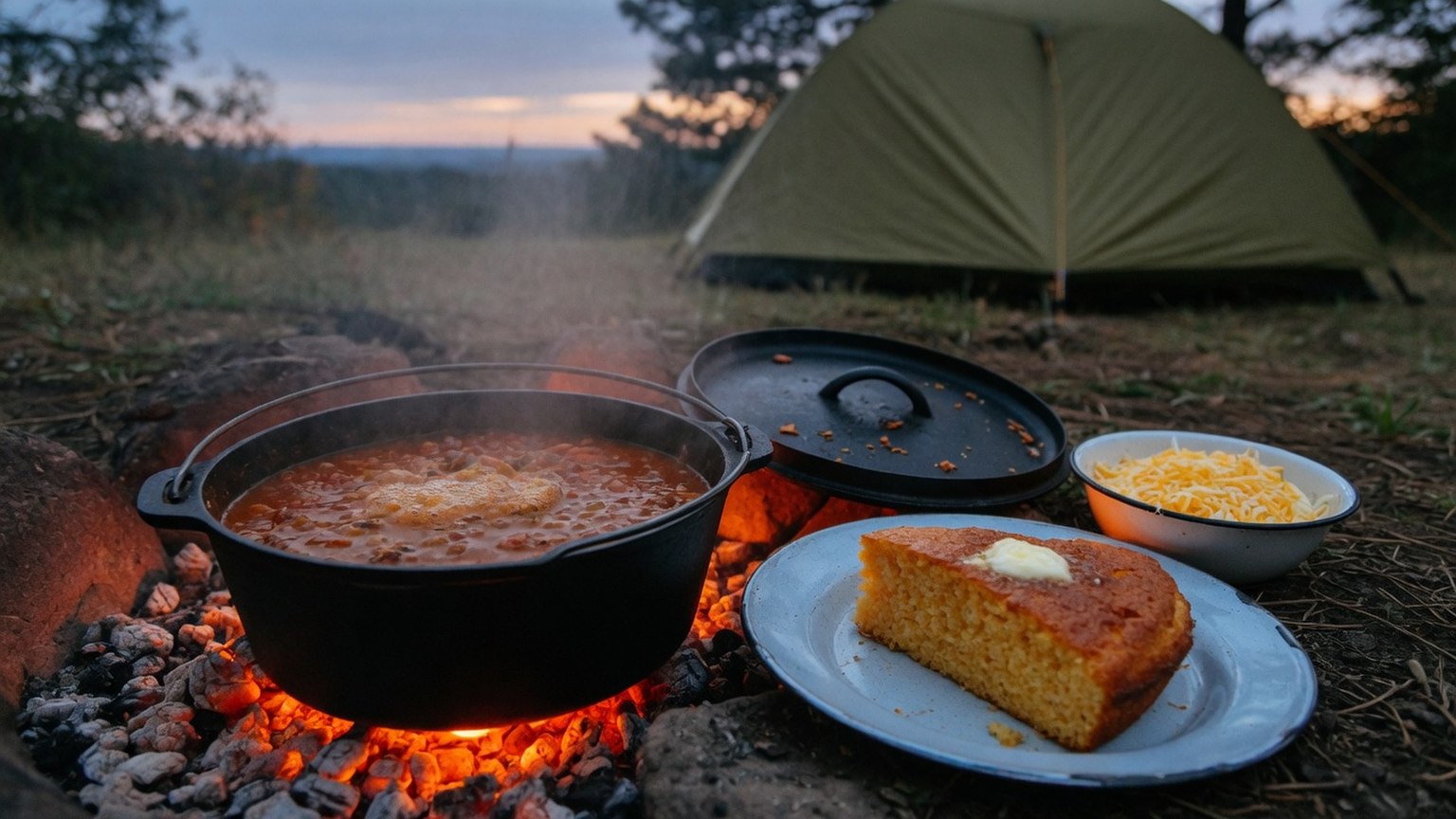
By late October, the camping day ends earlier than you expect. You get back from a hike in the last of the daylight, the temperature starts dropping, and the last thing you want is a sink full of dishes in the dark. That is where foil packet dinners earn their place in the camp kitchen. One packet per person, a bed of coals, and twenty-five minutes later you are eating something hot, savory, and satisfying — with nothing to scrub afterward.
Foil packets usually get filed under summer camping, but they are better in fall. Cold air makes you appreciate a meal that stays hot to the last bite, and early sunsets make speed matter. Here is how we build them so they work: no soggy vegetables, no raw chicken, and no foil glued to the potatoes.
Why Foil Packets Work So Well in Cold Weather
A foil packet is a tiny oven. The foil traps steam and heat, so food cooks from the coals below and the trapped heat above. That means you can cook a real dinner — protein, starch, vegetable — without a single pot. For fall camping, that matters for three reasons.
First, heat retention. A packet stays warm for several minutes after it comes off the fire, which buys you time to pour drinks and get everyone seated. Second, cleanup. There is no pot to scrape when the temperature is dropping and your hands are cold. Third, forgiveness. A packet is hard to overcook badly if you keep the pieces uniform, and it does not need constant stirring.
They are also cheap to equip — heavy-duty foil, parchment, and long tongs will get you through a whole season.
The Formula: Protein, Starch, Vegetable, Fat
Once you know the ratio, you can build a packet from whatever is in the cooler. We aim for about four to six ounces of protein, a cup of starch, and a generous cup of vegetables per person, plus a fat and something acidic.
- Protein: sliced sausage, chicken thighs cut into one-inch pieces, shrimp, firm fish fillets, or extra-firm tofu.
- Starch: baby potatoes halved, sweet potato cubes, pre-cooked rice, or canned beans.
- Vegetable: bell pepper, onion, zucchini, green beans, broccoli florets, or corn.
- Fat and flavor: olive oil or butter, garlic, smoked paprika, cumin, herbs, and a squeeze of lemon at the end.
Cut everything to a similar size — roughly one inch — so it finishes at the same time. This is the single biggest difference between a great packet and a sad one.
The double-wrap trick
Use two layers: an inner layer of parchment or nonstick foil, and an outer layer of heavy-duty foil. The parchment keeps acidic ingredients from reacting with the foil and stops cheese and potatoes from welding themselves to the metal. Fold the long edges together, roll them down twice, then roll the short ends. Leave a little headspace for steam, and keep the seam on top so juices do not leak into the fire.
Three Foil Packet Dinners for Late October
1. Sausage, Potato, and Pepper Packets
This is our default. Halve baby potatoes, slice a smoked sausage into coins, add sliced bell pepper and onion, and toss everything with olive oil, smoked paprika, garlic powder, salt, and pepper. It takes about 25 to 30 minutes over medium coals, and it is nearly impossible to ruin. A teaspoon of whole-grain mustard stirred in before sealing adds a nice tang.
2. Chicken Thighs with Apple and Sweet Potato
Fall flavor, no extra pans. Cut boneless chicken thighs into chunks and toss with cubed sweet potato, a diced firm apple, sliced onion, olive oil, salt, pepper, and a pinch of cinnamon or fresh thyme. The apple softens into the juices and offsets the smoke. Chicken needs to reach a safe internal temperature, so give this one closer to 30 to 35 minutes and check the thickest piece before serving. If you want a deeper flavor, brown the chicken in a skillet first — an extra step, but a good one on a cold night.
3. Trout or Salmon with Lemon and Green Beans
Fish is the fastest packet of the three, and it feels like a treat at a campsite. Put a fillet on parchment with trimmed green beans, a few slices of lemon, a knob of butter, salt, pepper, and dill if you have it. Cook for 12 to 15 minutes; the fish is done when it flakes easily. It is also the packet most likely to overcook, so set a timer and do not walk away.
If you want a side that follows the same logic, our foil packet potatoes on the grill work just as well in campfire coals, and they free up the fire for the main packet.
Coals, Not Flames
The most common foil packet mistake is cooking over a live flame. Flames lick the outside of the foil, scorch one spot, and leave the middle raw. You want a bed of coals that glows orange under a light gray ash — roughly 350 to 400 degrees at the cooking surface.
Build your fire about 45 minutes before you plan to eat, let it burn down, then spread the coals into a flat layer an inch or two deep. Set packets directly on the coals, seam side up, and turn them every 8 to 10 minutes with long tongs.
No fire? A camp stove works if you use a heavy skillet with a lid, and a grill over medium heat is even better — close the lid and treat it like an oven. In an RV oven, set packets on a sheet pan at 400 degrees for 25 to 30 minutes. The packet does not care where the heat comes from; it cares that the heat is steady.
Prep at Home, Eat in the Dark
The real secret to a fast camp dinner is doing the chopping at home. Cut vegetables and proteins the night before, toss them with oil and seasoning, and pack each portion in a labeled zip-top bag. At camp, you open a bag, dump it onto foil, wrap, and cook. Total hands-on time drops to about five minutes.
A few habits that pay off:
- Freeze raw packets flat in the cooler for the first night — they double as ice and thaw slowly.
- Pack foil, parchment, tongs, and a small bottle of oil in one camp-kitchen bag so you are not digging through bins after dark.
- Bring a headlamp set to red so you can check the fire without wrecking your night vision.
- Label bags with the contents and the cook time; it is easy to confuse chicken and fish in a cooler.
If you are feeding a family and want a bigger spread, our collection of easy camping meals for family trips has ideas that pair well with a packet night. And if you are still building out your fire kit, start with the essential campfire cooking equipment — good tongs and heavy foil matter more than a fancy gadget.
On a night when you would rather sit by the fire than tend a pot, our guide to camping with a Dutch oven covers the low-effort, one-pot alternative we reach for in late October.
Cleanup and Food Safety
Let packets cool for a few minutes before opening; the steam inside is hotter than the outside. Used foil goes in a trash bag, not the fire — pack it out with the rest of your garbage.
Food safety rules do not relax because you are outdoors. Keep raw meat cold until it goes on the fire, use separate bags for raw and cooked food, and check poultry to 165 degrees. A small instant-read thermometer lives in our camp box year-round.
Do not reuse foil that held raw meat, and do not cook a packet on ash-covered ground where a previous fire burned. A flat bed of coals or a grill grate gives you predictable heat.
A Better Cold-Night Dinner
Late fall camping has a rhythm of its own: short days, long evenings, and a fire that feels better than it does in July. Foil packet dinners fit that rhythm because they are fast, warm, and nearly dish-free. Once you have the formula down, you will be building dinners from whatever looked good at the market — and eating them while the fire does the rest. Happy glamping.