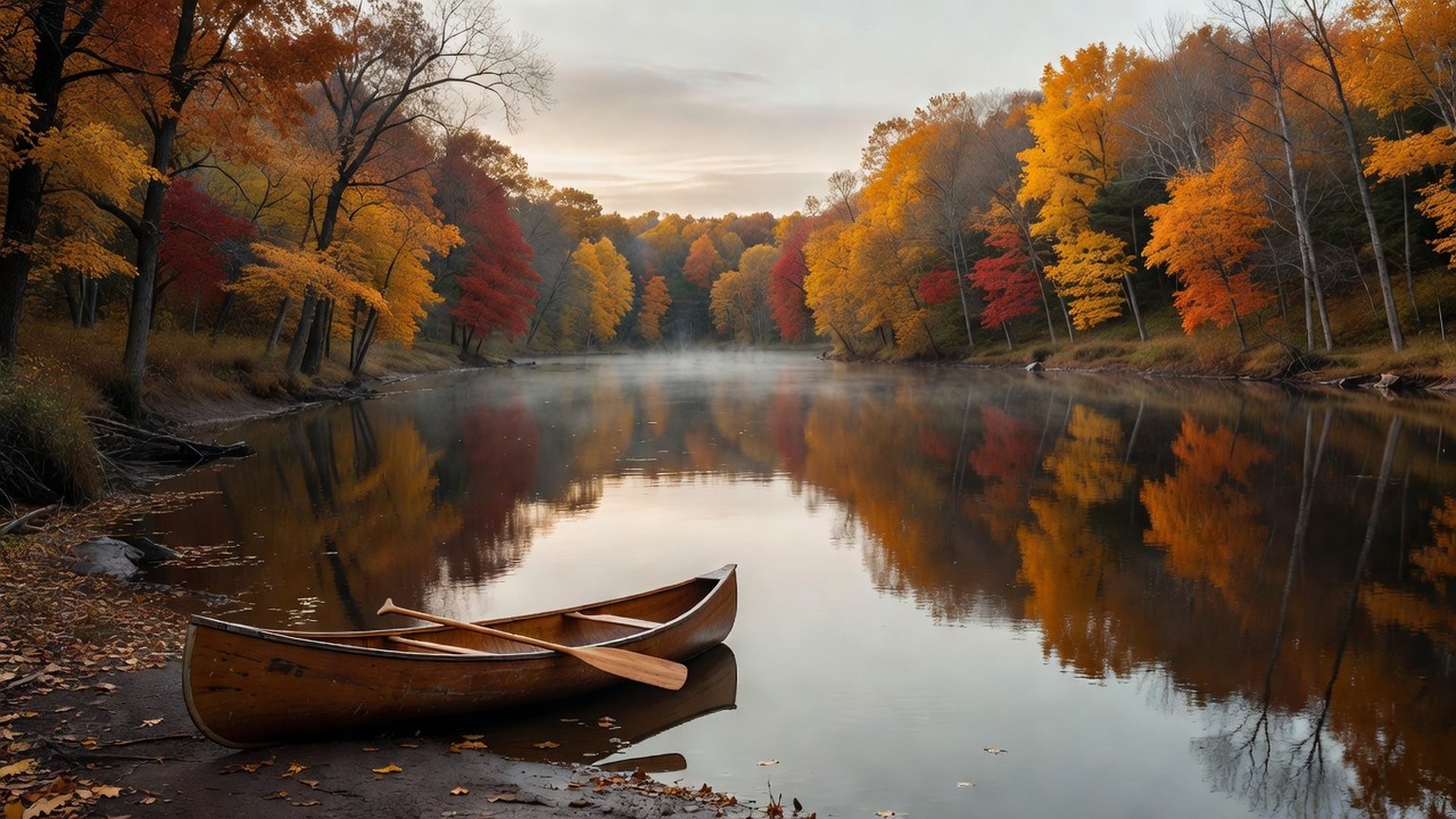
There is a particular kind of fall trip that never makes the leaf-peeper lists: you put a canoe in the water at first light, the far bank is on fire with color, and the only sound is your paddle cutting through water so still it doubles the trees. No overlook traffic, no selfie queue at a scenic pullout. Just you, a quiet river, and a season doing its best work.
Fall is also the sanest time to paddle. Summer crowds are gone, the water is low and clear, and the bug pressure drops off after the first hard frost. The tradeoff is timing: color moves fast, and a cold snap can strip a ridge in three days. Here are five glamping basecamps where the water and the foliage line up, roughly in the order the season arrives.
Why Quiet Water Beats the Overlook in October
From a ridge, fall color is a wide shot. From the water, it is a close-up. You float past individual maples hanging over the current, watch leaves land and drift, and see the whole hillside reflected in one long, unbroken mirror. Photographers call the still-water reflection the cheapest special effect in nature, and they are right.
Quiet water is also more forgiving than whitewater. Flat rivers and motor-free ponds mean you can paddle in a flannel shirt and jeans, carry a thermos, and stop on a gravel bar for lunch without worrying about a line. If you can steer a canoe on a calm lake, you can handle every trip below. We look for basecamps within about 20 minutes of a put-in, with a real bed and a hot shower waiting at the end — that combination is what turns a paddle into a glamping weekend instead of a logistics project.
St. Regis Canoe Area, Adirondacks, New York
Start here if you want the earliest color. The St. Regis Canoe Area is a motor-free pocket of the Adirondack Park with dozens of ponds and short carries between them, and its hardwoods typically turn in late September and early October. By the third week of October you are usually looking at bare birch and larch, so this is a trip to take now rather than later.
The paddling is as gentle as it gets: protected ponds, sandy put-ins, and portages short enough to do in two trips. Base yourself near Saranac Lake or Paul Smiths and you can spend a morning on one pond and an afternoon on another without ever loading the boat back on the roof. For a broader look at where to stay in the region, our guide to glamping in upstate New York covers the tent-and-cabin side of the Adirondacks and Catskills.
Buffalo National River, Arkansas
The Buffalo is 135 miles of protected river — the country’s first national river — and its bluffs and sycamore bottoms usually hit peak in mid-to-late October. The upper river near Ponca is the classic stretch for day floats, with tall limestone bluffs and water clear enough to count rocks. Lower down, near Tyler Bend and Gilbert, the river widens and the gravel bars get big enough for a proper camp.
Fall flows are low, which means you will do some dragging in the shallows. Plan a shorter float than you would in spring and treat the boat as a floating picnic table. Outfitters in Ponca and Gilbert run shuttles into November most years, but call ahead — the season closes early some years when the water drops too far.
The James River, Virginia
Virginia’s James is the longest river entirely inside the state, and its upper stretches run through folded ridges that color up in mid-to-late October. The section around Buchanan and Arcadia is the sweet spot for a fall float: plenty of flat water, a few easy riffles, and forested banks on both sides. The James River Face and the Blue Ridge foothills behind it give you the long views without the parkway traffic.
Basecamps cluster around Lexington and Natural Bridge, both an easy drive from the put-ins. This is also a good trip for a mixed group — paddlers can take the river while everyone else hikes or hits the small-town main streets, then meet for dinner. Water temperatures drop fast in October, so plan on a dry bag and a change of clothes even on a short float.
Merchants Millpond, North Carolina
If you want the strangest, most beautiful fall paddle on this list, drive to the millpond. Merchants Millpond State Park protects an old cypress-and-tupelo swamp with a pond that has been impounded since the early 1800s, and the bald cypress turn a deep bronze while everything else is already bare. The effect is a slow-motion autumn that runs from late October into November.
Paddling here feels like gliding through a cathedral: buttressed trunks, Spanish moss, and water the color of strong tea. The park has marked canoe trails, and the pond is small enough that a half day covers it. Combine it with a night or two nearby and you have one of the cheapest, quietest fall weekends in the Southeast.
The Guadalupe River, Texas Hill Country
Texas saves its color for last. The bald cypress along the Guadalupe and Llano rivers turn rusty orange in late October and November, often weeks after the maples up north are done. The stretch near Gruene and New Braunfels is the easiest entry point, with outfitters, shuttle service, and plenty of places to stay.
Fall is also the best time to be on a Hill Country river: the summer tubers are gone, the water is cool and clear, and the cypress shadows are long by mid-afternoon. If you are building a longer trip around it, our guide to where to glamp in Texas covers the treehouses and safari tents within driving distance. Just check flows before you commit — a dry fall can shut down the shallowest stretches.
Timing, Gear, and a Few Honest Caveats
Color is not a calendar event. It depends on species, elevation, and how cold the nights have been, and the difference between peak and past-peak can be four days. Use a foliage tracker as a rough guide, then call the local outfitter or park office — they will tell you what the water and the trees are actually doing this week.
On gear, the short list matters more than the long one:
- Dry bag, not a dry-ish bag. October water is cold, and a swamped canoe ends the day fast. A 20-liter dry bag holds a change of clothes, phone, and lunch.
- Layer for the water, not the parking lot. It is often 15 degrees colder on the river at 8 a.m. than at the car. Fleece under a shell beats a heavy jacket you will shed in an hour.
- PFD, worn. Low fall water hides strainers and root balls that summer flows keep submerged. Most state parks and outfitters require one anyway.
- Traction and a spare pair of shoes. Wet leaves on a boat ramp are slicker than they look.
One more caveat: many private campgrounds and glamping sites cut their season in late October or early November. Book early, confirm the dates, and ask whether water and bathhouses stay open. A place that is perfect in July can be a ghost town by Halloween — which, honestly, is part of the appeal.
If you are not ready to commit to a river trip, a lake basecamp is the lower-effort version of the same idea. Our list of camp sites on a lake has plenty of options where the canoe can live at the water’s edge all weekend. Either way, go soon. The color does not wait, and neither does the quiet.