

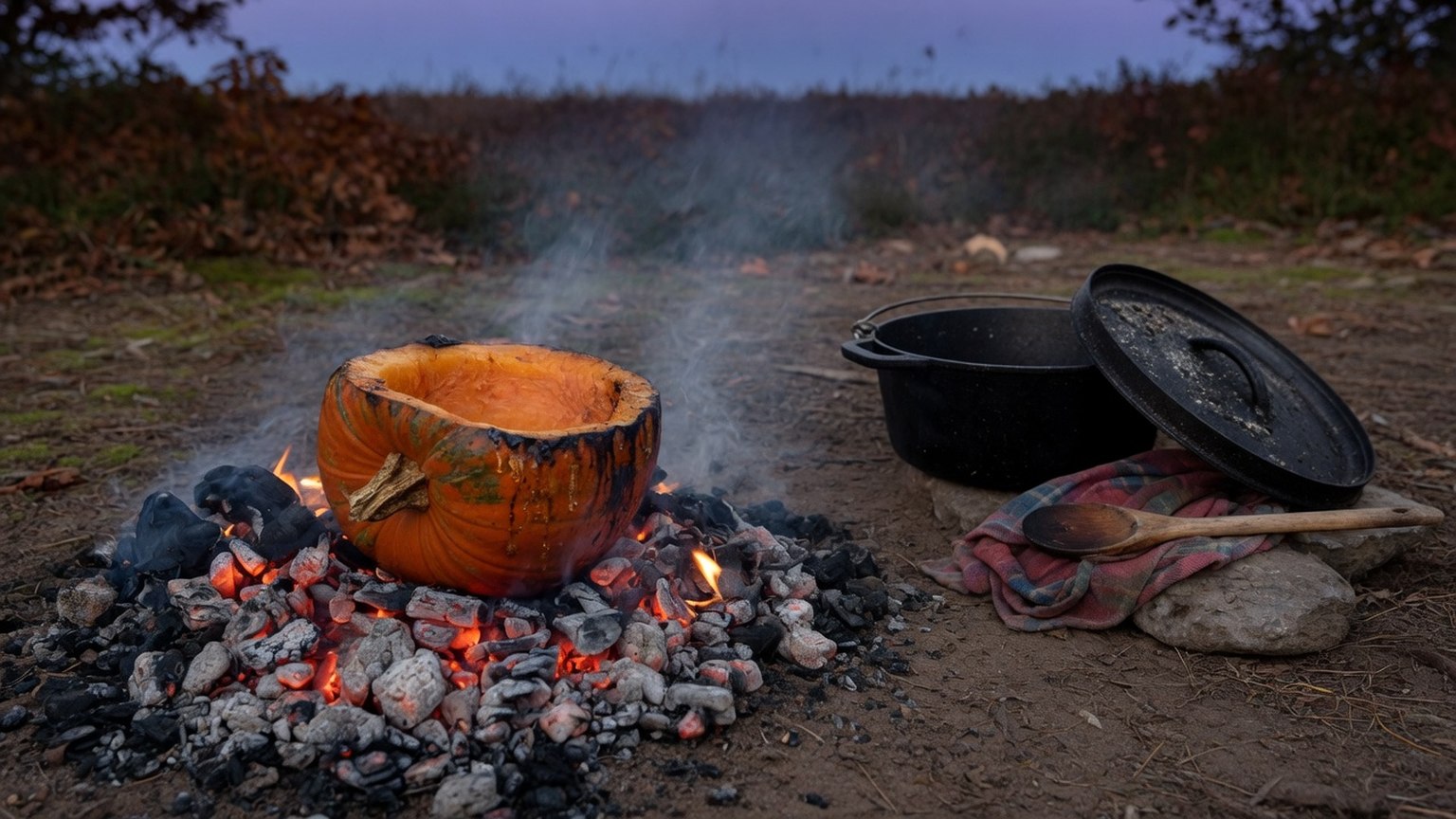
By late October the farm stands are stacked with sugar pumpkins, and most camping calendars are down to their last few weekends before the cold settles in for good. Most people treat pumpkin as a pie ingredient and stop there, which is a real loss at a campsite. Roasted over coals, folded into a stew, or baked into a loaf in a Dutch oven, pumpkin is one of the most forgiving things you can bring along. It travels well, it takes smoke beautifully, and it pairs with the apples and cider that are already in season.
This is not a pumpkin-spice marketing pitch. It is a practical plan for cooking real pumpkin outdoors: what to buy, how to roast it over a fire, and a handful of dishes worth planning a fall trip around. If you have cooked with a Dutch oven at camp before, you already own the main piece of equipment this article asks for.
Why Pumpkin Belongs at the Campfire
Pumpkin is dense, low in water compared with summer squash, and it holds its shape through long cooking. That makes it unusually well suited to camp conditions. A whole sugar pumpkin keeps for weeks on a cool counter and does not need cooler space until you cut it. Once roasted, the flesh freezes well, so you can cook a batch at home and bring portions along on the next trip.
It is also cheap and filling in a way that few vegetables are. One three-pound pumpkin yields roughly two cups of puree plus a pile of seeds — enough to thicken a stew for four people or make a loaf of bread and a batch of soup. For camp cooks feeding a group on a budget, that math matters.
The flavor argument is simpler. Fire adds smoke, and pumpkin absorbs it without turning bitter. Add something acidic — cider, vinegar, lemon — and the sweetness stays in balance instead of turning cloying. That is the whole trick behind every good savory pumpkin dish.
Choose the Right Pumpkin, Then Roast It Over Coals
Skip the giant carving pumpkin on the porch. Those are bred for size and structure, and their flesh is stringy and thin. Look for a sugar pumpkin, also sold as a pie pumpkin, in the two-to-four-pound range. It should feel heavy for its size, with a firm, unblemished rind and a stub of dry stem. Small is better than large here: a smaller pumpkin roasts faster, tastes sweeter, and fits inside a twelve-inch oven.
To roast it at camp, cut it in half through the stem, scoop out the seeds and stringy center, and rub the cut faces with oil. Set the halves cut side down in a Dutch oven or wrap them loosely in heavy foil and set them at the edge of the coal bed. With a lid and coals both above and below, expect forty-five minutes to an hour. Without a lid, closer to an hour and a quarter, turning once. You are done when a fork slides through the flesh with no resistance at all.
Let the halves cool until you can handle them, then scoop the flesh away from the rind with a spoon. Mash it with a fork. If it looks wet, spread it in a skillet over low heat for a few minutes to drive off excess moisture — wet puree makes a thin soup and a soggy bread.
Do not throw the seeds away. Rinse them, toss with a little oil and salt, and toast them in a dry skillet over medium coals for about ten minutes, stirring often. They are the best thing to eat while the rest of dinner cooks.
Three Savory Pumpkin Dishes for the Fire
Pumpkin and Sausage Stew
Brown a pound of loose sausage in the bottom of the Dutch oven, then add onion and a couple of cloves of garlic. Stir in two cups of pumpkin puree, a can of white beans, and enough broth to loosen it. Season with sage, black pepper, and a splash of cider. Lid on, coals on top and bottom, thirty minutes. The puree thickens the broth on its own, so there is no flour or cornstarch to fuss with. Serve it with bread and something sharp on top — aged cheddar, a spoon of yogurt, whatever is in the cooler.
Fire-Roasted Pumpkin Soup
Soften an onion in oil, add roasted pumpkin, a diced apple, and a quart of broth, and simmer for twenty minutes. Mash or blend as smooth as your setup allows; a potato masher leaves it rustic and that is fine. Finish with cream if you brought it, or a knob of butter if you did not. The apple is not decoration — it adds the acidity that keeps the soup from tasting flat. This is the recipe to make on the coldest night of the trip.
Pumpkin and Apple Foil Packets
Cube roasted pumpkin and a firm apple into bite-size pieces, toss with butter, brown sugar, cinnamon, and a pinch of salt, and seal each portion in a double layer of foil. Tuck the packets into the coals for twenty to twenty-five minutes, turning once. They work as a side dish next to grilled sausage, and they cook while you are doing something else, which is the highest compliment a camp recipe can earn.
Sweet Finishes: Pumpkin Bread and Cider Apples
A Dutch oven makes a credible oven if you get the coal count right: more heat on the lid than underneath, and a trivet or a ring of foil under the pan so the bottom does not scorch. A simple pumpkin bread batter — puree, flour, sugar, egg, oil, baking soda, cinnamon, and nutmeg — bakes in about thirty-five to forty-five minutes that way. Our guide to campfire baking covers the coal math in more detail if you want to go further into breads and pies.
For something faster, core and quarter a few apples, set them in a foil pan with a splash of cider, butter, and cinnamon, and let them soften over the coals for twenty minutes. They come out somewhere between baked apples and applesauce, and they are excellent over pancakes the next morning. We have a fuller version in our collection of easy campfire desserts.
One more use for that cider: warm it with a cinnamon stick and a few cloves while the fire burns down. If you are a coffee household instead, a spoon of pumpkin puree and a pinch of spice in the pot is worth trying — our notes on making coffee at camp cover the brewing side.
Practical Notes: Storage, Knife Work, and Cleanup
- Bring a cutting board and a sharp knife. Pumpkin rind is tough, and a dull camp knife is how people get hurt.
- Cut pumpkin at home when you can. Fewer knives and less mess at the table is always the better trade.
- Keep raw cut pumpkin wrapped and cold; roasted puree keeps three or four days in a good cooler.
- Freeze leftover puree in flat bags. It doubles as ice in the cooler and dinner on the next trip.
- Clean the Dutch oven with hot water and a scraper, not soap, and dry it over low heat before storing.
None of this requires special gear beyond a pot, a knife, and foil. That is the appeal of pumpkin as a camp ingredient: the barrier to entry is almost zero, and the payoff is a dinner that feels like the season.
Make Pumpkin Part of Your Fall Routine
The best fall camping meals are the ones that use what the season is already giving you, and right now that means squash, apples, and cider. Roast one pumpkin on your next trip, see how your fire behaves, and keep the rest of the menu simple. Once you have done it once, the second time is easy — and by then you will be the person at the campsite who knows what to do with the pumpkin besides carve it. Happy glamping, and happy eating.


