Fall color usually gets experienced at one of two speeds: sixty miles an hour through a windshield, or the slow grind of a steep hike. There is a third option that quietly beats both. On a bike, you cover enough ground to reach the good ridges, but you move slowly enough to actually look at them. You hear the leaves, you smell the woods, and you stop wherever you like without hunting for a parking spot.
A foliage bike weekend is one of the most rewarding trips you can plan this season, and it does not require serious fitness or expensive gear. Most of the riding that makes autumn spectacular happens on gentle paths and quiet back roads, not technical singletrack. Here is how we plan ours, from picking a route to building a glamping base camp around it.
Why Two Wheels Beat Four in Leaf Season
Anyone who has leaf-peeped from a car knows the rhythm: crawl forward, glance sideways, look for a pullout, and find it full. Fall weekends turn scenic byways into long parking lots, and the best overlooks are usually the most crowded ones.
Bikes solve that problem without asking much of you. A rail trail or a rural loop puts you away from the brake lights, and the pace suits the season — fast enough that a ten-mile ride shows you three valleys, slow enough that you notice the maple turning red at the edge of a field. You also arrive somewhere instead of just passing through. A town lunch, a farm stand, a riverside bench: all of it becomes part of the ride instead of a stop on a checklist.
There is a comfort argument too. Cool air is exactly the weather cycling was made for. You will not overheat on a climb in October the way you would in July, and a light pace keeps you warm without leaving you soaked in sweat.
Choosing a Route That Fits Your Group
The best fall ride is the one everyone can finish smiling. Match the route to the least experienced rider in your group rather than the strongest, and you will have a better day for it.
Rail trails and converted corridors
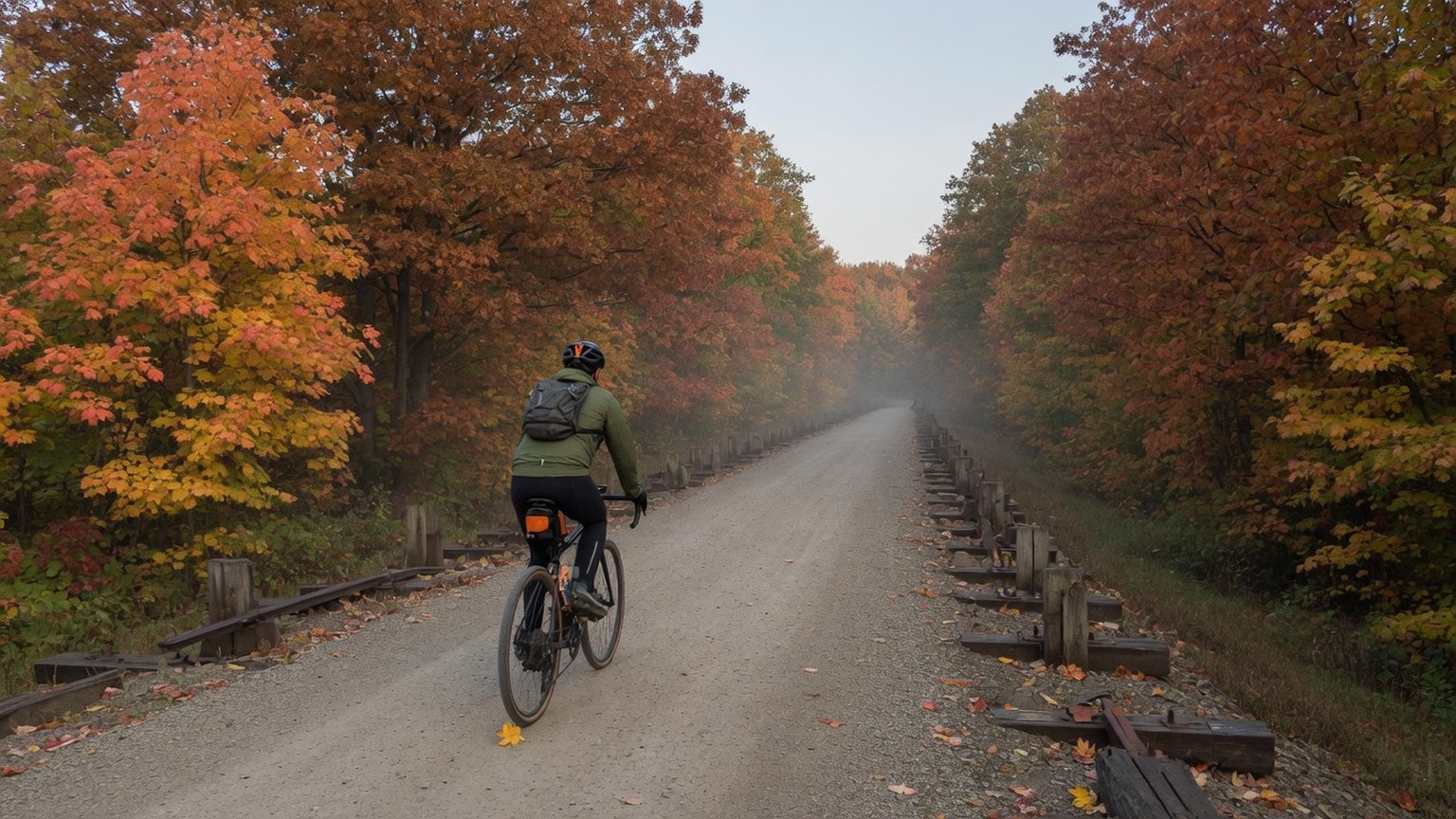
Old rail lines are the safest bet for a foliage weekend. Grades are gentle by design, surfaces are usually packed gravel or pavement, and the corridors follow rivers and cut through hillsides where the color runs thickest. Most run ten to thirty miles end to end, so you can turn around whenever you have had enough.
Country loops and farm roads
If you want the postcard version of autumn — barns, stone walls, woodsmoke — look for a rolling loop of quiet paved roads outside a small town. Keep the distance modest, pick routes with low traffic, and plan the day around a bakery or a diner in the middle of the loop. Start with the beginner-friendly terrain discussed in our guide to mountain biking trails for every skill level, and scale up only once the whole group is comfortable.
Gated forest roads and gravel
Gravel riding trades constant scenery for the feeling of having the woods to yourself. Forest service roads and gated access routes often climb to ridgelines with sweeping views, and you will share them with almost nobody. Go with a group, carry a map or a loaded phone, and turn around early if the surface turns loose or washed out.
Timing Peak Color on a Bike
Color moves downhill and southward all season, and a bike trip is more sensitive to timing than a drive, because your route is fixed once you start pedaling. Two habits help.
First, aim for the range rather than the one perfect weekend. A week on either side of peak still delivers beautiful riding, and you skip the single crowded Saturday that everyone else chose. Second, check your elevation. A route that climbs from a valley to a ridge can pass through three weeks of fall in a single afternoon — green at the trailhead, gold at the midpoint, bare branches at the top. That is not a problem. It is the best part.
Mornings are the reward for early risers. Cool air holds color, mist sits in the hollows, and the light at eight in the morning is softer than anything you get at noon. If you only ride once this fall, ride before lunch.
Building a Glamping Base Camp Around the Ride
The reason a foliage bike weekend pairs so well with glamping is simple: after a day in cool air you want a warm bed and a hot shower, and on the morning of a ride you do not want to spend an hour setting up a tent.
Look for a base within a short drive of the trail. Fifteen minutes to the trailhead means you can be rolling by nine and back at camp by mid-afternoon, with daylight left for a fire. Sites with covered or lockable storage, or a cabin porch, make bike storage easy, and a canvas tent or tiny cabin keeps your gear dry if the weather turns on you.
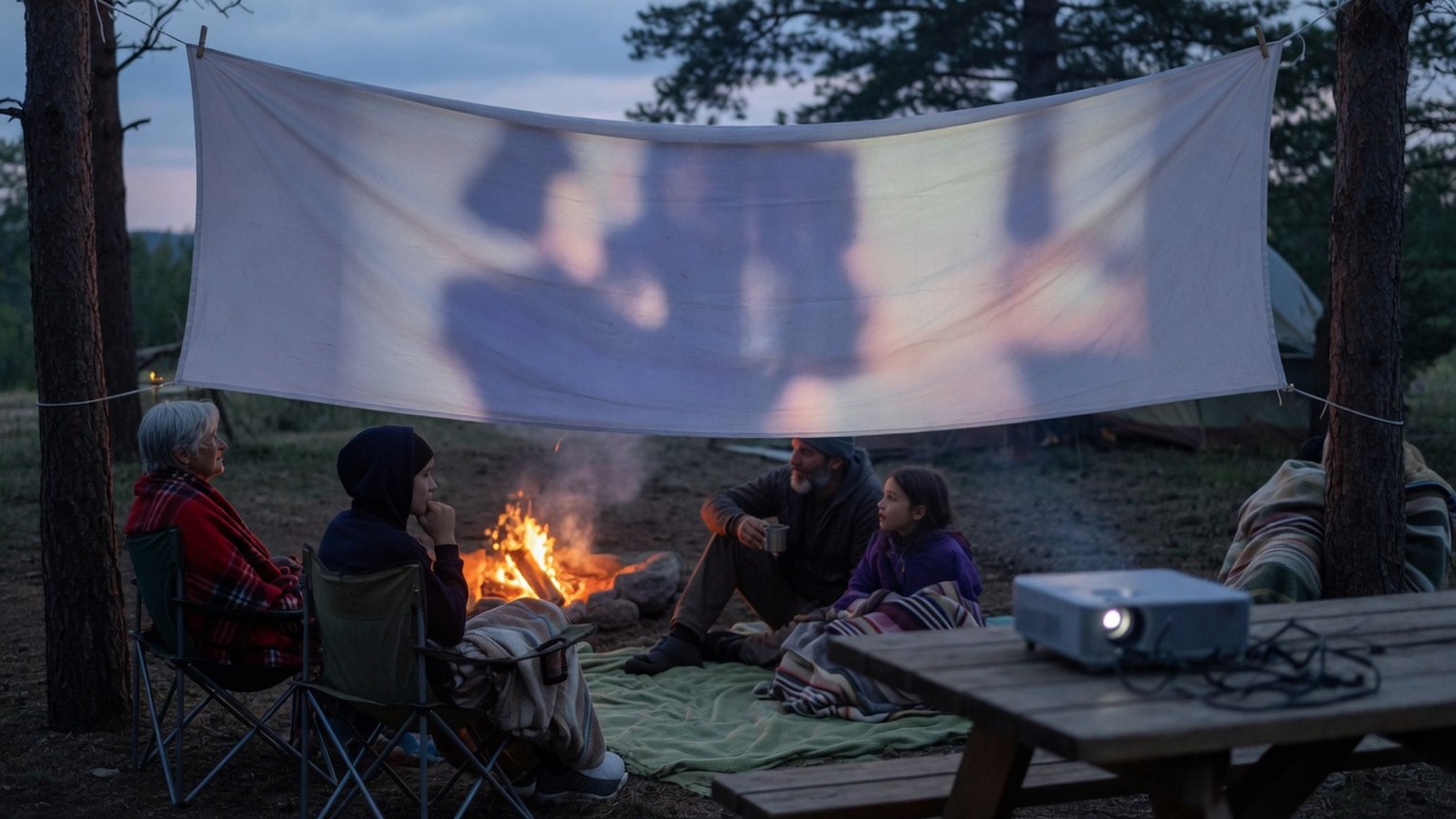
Plan the day as a loop rather than a there-and-back. Ride in the morning, eat a real lunch in town, and spend the afternoon walking somewhere you have never been. Then let the evening be simple: dinner over coals, a chair pointed at the fire, and a few good photos to look through before bed.
What to Pack for a Fall Ride
- Layers you can peel off — a base layer, a light insulating layer, and a wind shell cover almost everything October throws at you
- Gloves and a warm hat, because hands and ears get cold first on a long descent
- A small frame or handlebar bag for a phone, snacks, and a spare tube
- Water, plus something warm in a thermos for the turnaround point
- Bike lights, even on a daytime ride — short days and long lunches make dusk arrive faster than you expect
- A basic repair kit, a pump, and a multitool
For the campsite side of things, the accessories that make cold evenings pleasant matter as much as the riding gear. If you are building out that kit, our roundup of cozy campfire gear for chilly fall nights covers what we actually reach for once the sun drops behind the ridge.
Riding Safe and Staying Welcome
Cool-weather riding is low-risk if you plan for two things: visibility and warmth. Colors that blend into a hedge are hard for drivers to see, so wear something bright, ride single file on public roads, and take the lane only when it is genuinely safe. Start earlier than you think you need to, since afternoon light fades fast in fall and a cold descent is no fun in the dark.
Stay on open routes and respect closures. Some trails and forest roads allow bikes only seasonally, and posted signs exist for a reason, especially on private land and in wildlife areas. Quiet morning hours are also when you will see the most wildlife, from deer drifting between fields to hawks working a ridgeline. Ride slowly through those moments, and the tips in our wildlife watching guide will help you spot more without disturbing anything.
One more habit worth keeping: leave the branches and the late flowers where they are. Fall color is the whole attraction, and a trail lined with broken stems looks worse every week of the season.
Make It an Annual Ride
Pick a route, book a base camp, and put the same weekend on next year’s calendar. Fall riding rewards repetition — the same trail looks completely different from one October to the next, and the town you stopped in becomes a place you know. Bring a friend who has never tried it, keep the mileage comfortable, and let the season do the rest. Happy glamping, and happy pedaling.