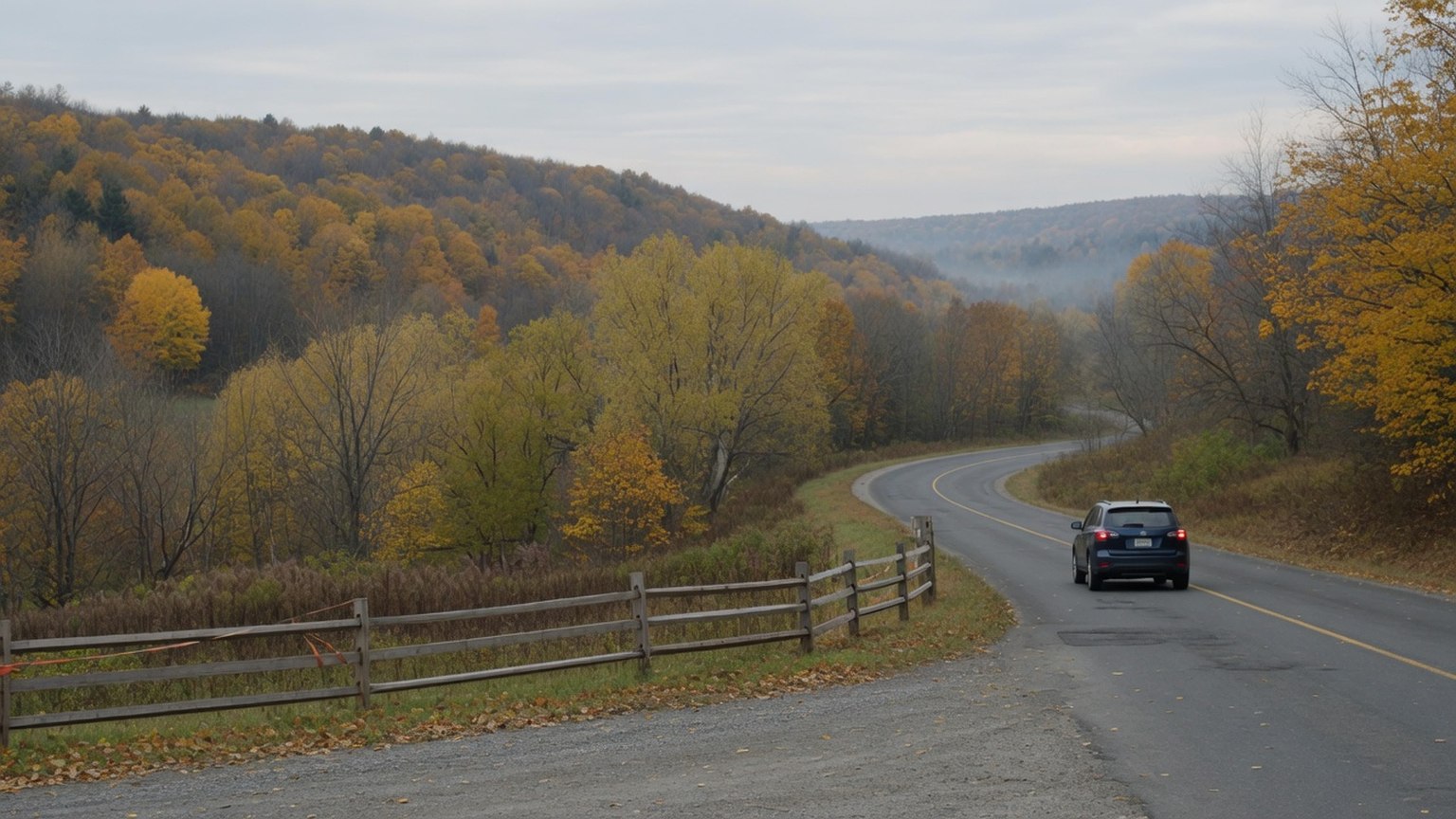
Some autumns, the best leaf-peeping trip is not a hike, a paddle, or a train ride. It is a drive. A slow loop on back roads, coffee in the cupholder, windows cracked, one golden hillside after another sliding past the windshield. Scenic drives are the most forgiving way to chase fall color: they suit grandparents and toddlers equally, they rarely require a reservation, and they can change direction the moment the forecast does.
We have spent a lot of October weekends pointing the truck at a distant ridge and simply following the color until it ran out. Over the years that habit has taught us a few things about planning a foliage drive that actually delivers — when to go, how to build a route that keeps rewarding you, and which stops are worth pulling over for. Here is the playbook we use.
Why a Scenic Drive Is the Smartest Fall Foliage Trip
A drive covers ground, and that matters in autumn. Fall color is not one event on one date. It is a wave that rolls down the map over several weeks. A single trail or overlook gives you one snapshot; a well-planned route can move you from still-green valleys to fully gold ridges in under an hour.
Drives are also the most accessible option for mixed groups. Nobody has to keep pace, no one gets left behind on a climb, and the whole outing can be reshaped around a nap, a hungry kid, or a sudden rain shower. Add a thermos, a picnic basket, and a couple of blankets, and the car itself becomes the destination.
And there is something quietly romantic about it. Decades of road-trip memories have made autumn drives a tradition for a reason: the color comes to you, framed by the windshield, instead of you marching past it with a pack on your back.
How to Time Peak Color
You cannot book fall color the way you book a campsite, but you can hedge your bets. Two factors matter more than any published map: elevation and weather.
Think in elevation, not just calendar
Color moves downhill, not simply north to south. High ridges and north-facing slopes turn first, sometimes weeks before the valleys below them. That is why a route with real elevation change is such a good bet. If the pass is already past peak, the river bottoms are often just getting started.
Follow the weather, not just the map
Warm, sunny days and cool, clear nights are the recipe for vivid color. A stretch of heavy wind or an early hard freeze can strip a hillside almost overnight. Watch local foliage reports and the social feeds of towns along your route, then build in a fallback loop twenty minutes downhill. A flexible plan is worth more than a perfect one.
Building a Route That Keeps Delivering
Our favorite drives share the same shape: a loop instead of an out-and-back. A loop means every mile is new, and there is no temptation to race back along a road you have already seen. Aim for roughly 60 to 120 miles of driving with four or five planned stops, and choose a route that climbs a little, crosses a river, and passes through at least one small town.
Interstates are fast but boring. Scenic byways, farm-to-market roads, and county routes are where the color lives, especially where the pavement follows water. Rivers and creeks cut the deepest color corridors in most parts of the country, so a route that shadows a river valley is rarely a bad choice.
Leave slack in the plan, too. The best stop is almost never the one you marked on the map. It is the gravel pull-off where a field burns orange against a blue sky, or the one-lane bridge where the whole valley opens up at once.
What to Pack for a Day of Leaf-Peeping
An autumn drive is really a picnic with better scenery, so pack accordingly. Our checklist looks like this:
- Two thermoses — coffee for the morning, soup or cider for the afternoon
- A blanket and folding chairs, so a roadside view can become a twenty-minute sit
- Layers, gloves, and a light rain shell, because mountain weather turns fast in October
- A small cooler with lunch, fruit, and something warm to drink
- Binoculars, a paper map, and a charged phone with an offline map downloaded
- A bag for trash, because nothing spoils a view like litter
Keep it simple. The point is to stop often, not to stage an elaborate tailgate in a turnout.
Making Stops Count
A drive is only as good as its stops. Build your day around three kinds: the classic overlook, the small town, and the farm stand.
Overlooks and photo stops
Pull over safely and completely. Leaf season turns narrow shoulders into hazards, and a car stopped half in the lane is the fastest way to ruin everyone’s afternoon. Golden hour — roughly the first and last hour of daylight — is when ridges look their best, and a softly overcast day can actually beat harsh sun for photos, since colors read richer without blown highlights. If you want to bring home more than phone snapshots, our guide to backcountry photography covers the settings and habits that make autumn landscapes sing.
Small towns and farm stands
This is where a drive becomes a memory. A town square, a bakery, a cider mill, a pumpkin stand on a gravel lot — plan to spend real time rather than ten rushed minutes. Buy something local and ask the person at the counter which road looks best right now. Locals always know, and they are usually right.
Camping Along Your Route
The best way to extend a scenic drive is to camp in the middle of it. Campgrounds and glamping sites along popular byways fill quickly on fall weekends, so reserve early or aim for Sunday through Thursday nights, when things quiet down and sites open up.
Choose a site inside the color corridor rather than at the end of a long commute. Waking up ten minutes from the overlook you want to photograph at sunrise beats driving an hour in the dark. Pack out everything you bring in and keep fires in established rings. Our piece on sustainable camping and Leave No Trace is a good refresher before you go.
Fall is also prime wildlife season. Elk bugle, hawks and eagles ride the thermals, and deer move at dawn and dusk — sometimes onto the road. Slow down near water and field edges, and if you want wildlife to be part of the trip, these wildlife watching tips will help you see more without disturbing anything.
Driving Safety in Leaf Season
Two autumn realities deserve respect. First, wet leaves are slick. Treat them like ice in curves and braking zones, especially on shaded roads that stay damp all day. Second, animals are active at exactly the hours you will be driving. Slow down at dawn and dusk, use high beams when nobody is ahead of you, and give cyclists and roadside photographers plenty of room as you pass.
Give the car a little attention before you leave, too: tires, wipers, and a full washer reservoir. A bug-splattered, leaf-streaked windshield ruins the best view of the day.
Make a Fall Drive a Tradition
Scenic drives ask almost nothing of you and give back an entire day of gold, rust, and red. Pick a loop, pack a thermos, promise the group that nobody has to hike a single mile, and let the road do the work. Somewhere between the second overlook and the last cup of cider, you will catch yourself planning next year’s route. Happy glamping — and happy leaf hunting.