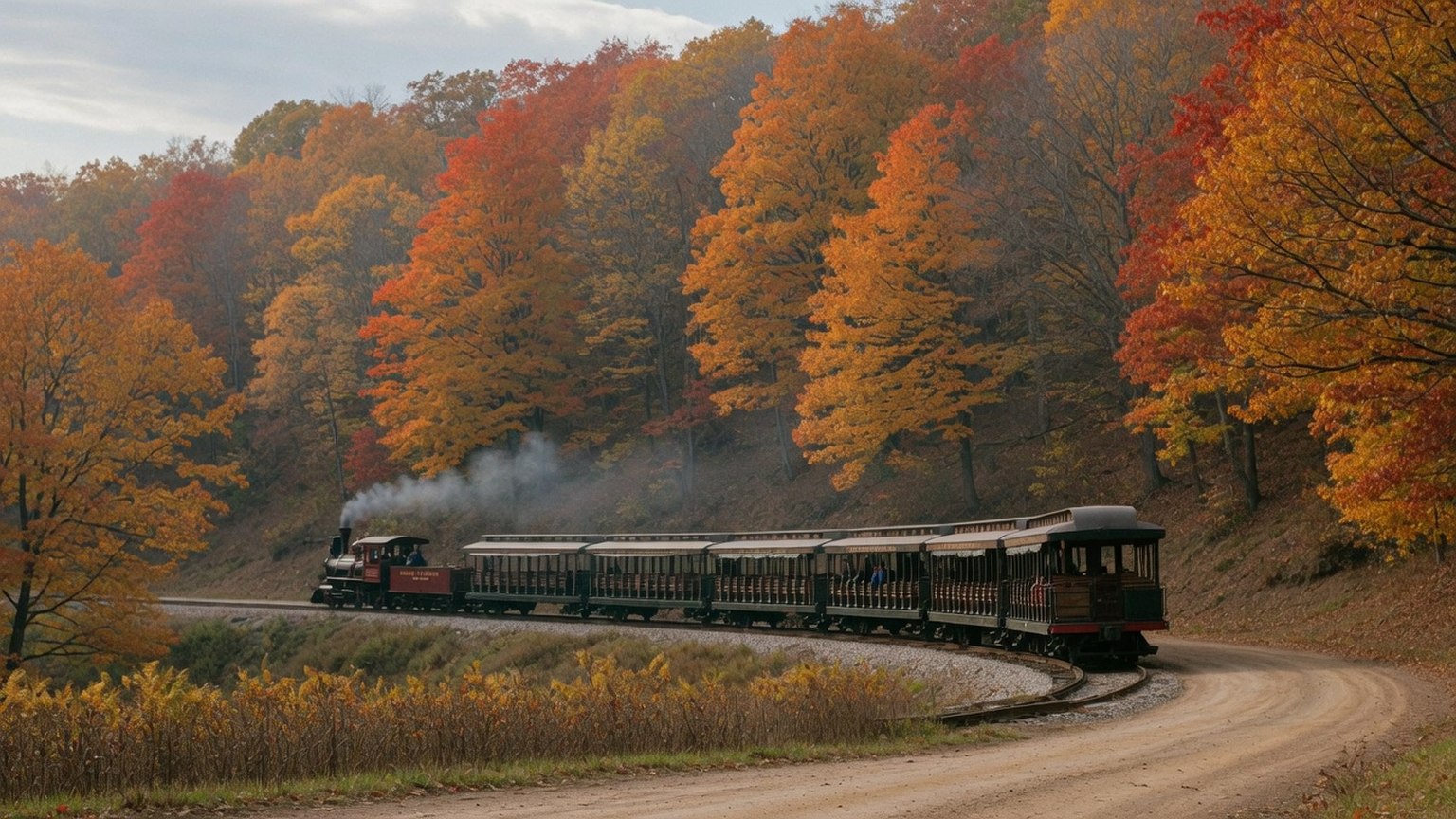
There is a particular kind of fall trip that does not involve a trailhead, a paddle, or a windshield full of brake lights. You settle into a seat, a whistle sounds, and the woods begin sliding past at the speed of a slow walk. Scenic train rides are one of the most underrated ways to see autumn color, and they quietly solve the two things that ruin leaf season for most people: traffic and crowds.
If you have been meaning to plan a foliage trip this year, a heritage or scenic railroad deserves a place on your short list. The rides are short enough for a weekend, and the towns at either end are the kind of places you want to wander in October. Here is how to choose a route, time it right, and build a glamping weekend around it.
Why Fall Color Looks Different From a Train
Most leaf-peeping happens at 55 miles an hour with your eyes flicking between the road and the scenery. A train moves at a pace that lets you actually look. Routes are also laid out along the geography that made railroads possible in the first place — river gorges, mountain grades, and narrow valleys that highways either bypass or climb around. That means the train often travels through color you simply cannot reach by car.
There is a practical side too. You are not hunting for a parking spot at a crowded overlook, and you are not the one driving home in the dark. A three-hour excursion with an open-air car, a thermos of coffee, and a long stretch of golden ridgeline in front of you is a genuinely restful way to spend a fall afternoon. Families with kids get a moving vantage point that keeps everyone interested without a screen. Couples get a shared seat and nothing to do but watch the hills.
What to Look For When You Book
The difference between a good foliage train trip and a great one usually comes down to booking decisions you make weeks before you go. A few things are worth checking carefully.
- Timing. Peak color moves down the map and down the mountain all month. Lower elevations and southern routes typically peak later than high-country and northern ones, so a route that is past its best in early October may still be spectacular at the end of the month.
- Car type. Open-air and observation cars are worth the upgrade on a color trip. Enclosed cars are more comfortable in wind and rain, but a window between you and the hills costs you sharpness in photos and a lot of the smell of the woods.
- Both sides of the aisle. Ask which direction the train turns most often, or simply plan to trade seats with your group on the return leg. The best scenery is rarely evenly split.
- Midweek departures. Weekend trains in peak October sell out early and run full. A Tuesday or Wednesday ride is usually easier to book, less crowded at the railings, and often cheaper.
- A layover town. Routes that pause for an hour or two give you time for lunch, a walk on a main street, and a look at the river from ground level.
Reserve as early as you can commit. Peak-weekend excursions on the well-known routes fill up weeks ahead, and the open-air cars go first.
Classic Routes Where Fall Is the Whole Point
You do not need a specific railroad to have a great trip, but a few regions are so reliably beautiful in autumn that the ride becomes the reason to go.
New England and the Northern Appalachians
The classic sugar maple country of New Hampshire, Vermont, and western Maine is the postcard version of fall, and several scenic railroads run through it. The glamping in Vermont scene makes a natural basecamp, with covered bridges, farm stands, and river valleys in every direction. Book the first half of October here if you want peak color and peak crowds, or push later and take your chances with a quieter valley.
Blue Ridge and the Smokies
Southern mountain color arrives later and lasts a little longer, usually stretching well into late October and sometimes the first days of November. Routes that follow river gorges through the Blue Ridge and Smoky Mountains offer a long, slow look at slopes covered in hickory, oak, and sourwood. Towns like Bryson City and the Asheville corridor are natural hubs, which is why Asheville glamping works so well as a base for a rail weekend.
Rockies and the Southwest
High-country routes in Colorado and northern New Mexico run through aspens that turn a startling gold against dark conifers. Arizona canyon routes add red rock and cottonwoods to the mix for a completely different palette.
Appalachia and the Midwest
West Virginia and the Ohio River valley offer some of the most underrated fall rail trips in the country, with steep grades, hardwood ridges, and small coal-country towns. Further north, river routes along the upper Mississippi run past limestone bluffs that turn orange and rust in a single week.
Pairing the Ride With a Glamping Basecamp
The best way to use a scenic railroad is as the centerpiece of a two-night stay rather than a day trip. Ride in the morning, then spend the afternoon walking a river trail or exploring town, and let the evening fire do the rest. Staying close to the depot saves you a long drive in the dark and lets you be at the station early on a busy morning, which matters more than you would think.
Glamping works especially well for this kind of weekend. You get a warm bed and a real coffee setup without hauling a full camp kit, and the fire pit is already there when you come back from the ride. If you are traveling with people who are not campers, a canvas tent or cabin near the tracks is the easiest possible introduction to a fall weekend outdoors.
Getting the Most Out of the Day on Board
A little preparation turns a nice ride into a memorable one. For photographs, sit toward the back of the car when the train is climbing, and lean into the window frame to steady the camera on slow corners. A wide shot of the whole curve from a vestibule platform usually beats a tight shot through glass. Our guide to backcountry photography covers the same fundamentals of light, framing, and patience that apply here.
Keep an eye on the water, too. Rivers and creeks along rail corridors are wildlife magnets in fall, and it is common to spot deer at the edges of clearings, herons working the shallows, and raptors hunting from fence posts. Binoculars stashed in a daypack pay off, and the tricks in our wildlife watching tips for your next glamping adventure apply just as well from a train window as from a blind.
Pack for a moving vehicle: layers you can shed, a compact blanket, a thermos, a few snacks, and a strap for the camera. Eat before you board if the ride is short, and save the town lunch for the layover.
Practical Tips for Peak-Weekend Trips
The details that trip people up are almost never about the scenery. Arrive at the depot at least forty-five minutes early on an October weekend, because parking in small towns fills quickly and boarding is not always as organized as it sounds. Confirm your departure time and the check-in process a day ahead, since heritage railroads sometimes shift schedules for special event trains.
Dress warmer than the forecast suggests. Open-air cars are wonderful in still air and bracing at speed, and mountain mornings hold cold well past breakfast. Bring water, a few easy snacks, and cash for the small shops and stands that may not take cards. If you are traveling with kids, pick a ride of two hours or less for a first outing.
A Fall Trip Worth Slowing Down For
Fall has a way of turning into a to-do list of overlooks, hikes, and drives. A train ride is the opposite of that: a few hours where the scenery comes to you and the only decision is whether to sit in the sun or the shade. Pick a route, book the open-air car, and let a glamping weekend take care of everything else. Happy glamping, and happy leaf season.