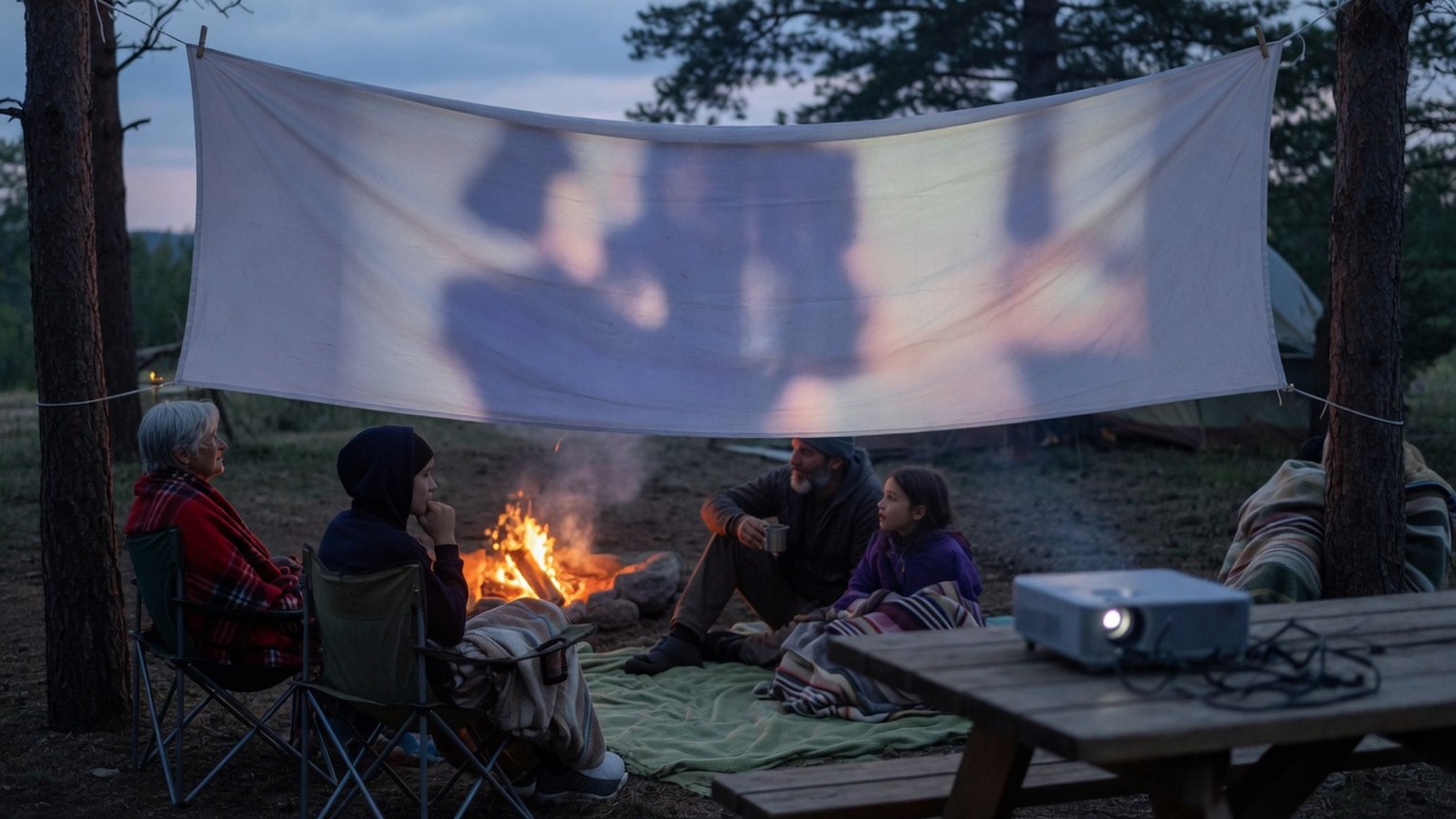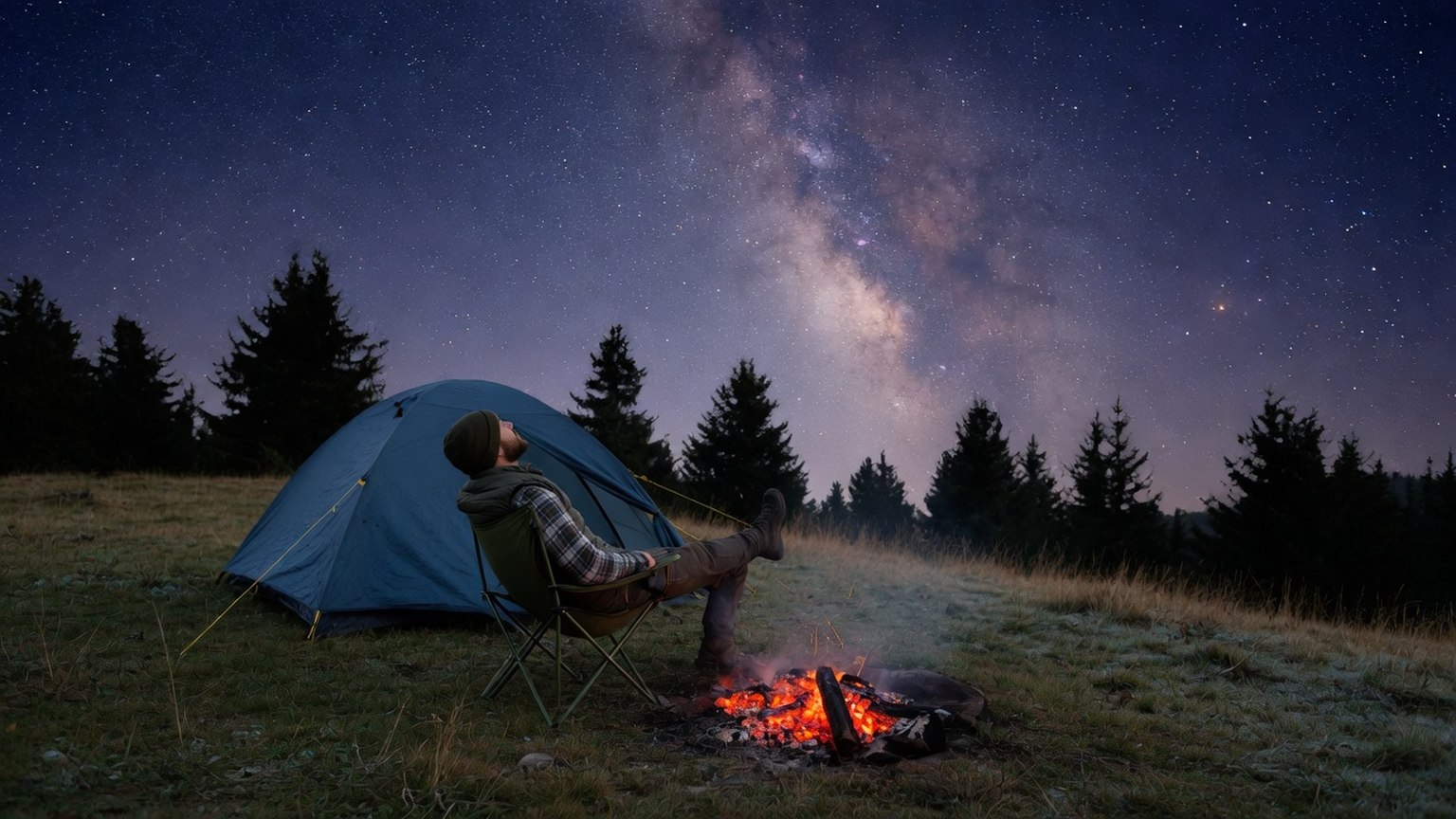
Something quietly changes in the night sky when autumn arrives. The humid haze of summer thins out, darkness falls before nine o’clock, and the crisp air seems to sharpen every star. For anyone who camps, that combination makes fall the best stargazing season of the year — and one of the easiest outdoor hobbies to start.
You do not need a telescope, a desert, or a degree in astronomy. A campsite an hour or two outside the city, a clear forecast, and a warm jacket are enough to see the Milky Way, a couple of planets, and the occasional meteor. Here is how to plan a fall stargazing camping trip that actually delivers.
Why Fall Beats Summer for Stargazing
Three things line up in autumn. First, the nights are long. By late September the sky is fully dark by about 8:30 or 9 p.m. across most of the country, so you can enjoy an hour of stars before you even think about sleep. In July you would be waiting until 10:30 or later.
Second, the air is drier. Cooler temperatures hold less water vapor, and water vapor is what scatters light and washes out faint stars. On a still fall night far from town, the sky can look noticeably darker and more detailed than it did in August.
Third, and maybe most important, the crowds are gone. Summer campgrounds empty out after Labor Day, which means the sites closest to a dark horizon — the ones with a clear view over a lake or a meadow — are suddenly available.
How to Choose a Campsite for Dark Skies
The single biggest factor in what you can see is light pollution. You can spot a few bright stars from almost anywhere, but the Milky Way requires a genuinely dark sky.
Start With a Light Pollution Map
Free online light-pollution maps color-code the country from white at city centers to blue and gray in truly dark places. Look for a state park, national forest, or wildlife area inside a green or blue zone within a reasonable drive. You do not need the darkest spot on the map; moving even thirty miles away from a mid-size city can transform the sky.
Mind the Moon
A full moon is beautiful and terrible for stargazing. It brightens the entire sky and hides all but the brightest objects. If you have a choice, camp near a new moon, or plan your observing for the hour or two after moonset. A thin crescent low on the horizon even adds a nice touch to the view.
Look for Open Horizons
Treetops and ridges block a big chunk of the sky. A lakeshore, a prairie, a desert flat, or a high bald gives you more sky per glance and better reflections on the water. Just make sure you are not camping under a lone towering tree — safety comes first when you are setting up in the dark.
What to Pack for a Crisp-Night Sky Session
Stargazing is mostly about being comfortable while you look up, and that is where a little preparation pays off. Our stargazing essentials cover the full list, but the core kit is simple: a red-light headlamp, a reclining camp chair or a thick blanket, a star chart or a phone app on dim mode, binoculars if you have them, and a thermos of something hot.
Red light matters more than people expect. White light wrecks your night vision and takes twenty minutes to recover, while red light lets you read a map or find your mug without ruining the view. A cheap red filter or a red-mode headlamp is the best few dollars you will spend on this hobby.
What You Can Actually See This Season
Fall skies are generous to beginners. You do not need to learn a hundred constellations to have a great night out.
The Milky Way
From a dark site in September and October, the Milky Way arches overhead and down toward the southwest, thick with dust lanes and star clouds. It looks like a faint, textured cloud until you realize every speck of it is a star. Sweep a pair of binoculars along it and you will find clusters that look like spilled salt.
Planets
Planets are the easiest targets for a new observer because they shine far brighter than any star and do not twinkle much. Depending on the year, fall evenings often feature a bright planet low in the west or a giant one climbing in the east. A free planet-finder app will tell you exactly where to look on your trip dates.
Meteors and Constellations
Autumn brings several modest meteor showers and a handful of famous constellations, including the Great Square of Pegasus and the sweeping W of Cassiopeia. Lying back and simply watching for a random streak of light is a perfectly good way to spend an hour.
Staying Warm After Dark
Crisp is charming until you are shivering. Temperatures drop fast once the sun goes down in fall, and sitting still is much colder than moving around. Dress in layers, sit on something insulated rather than directly on the ground, and keep a blanket within reach. If you are camping in a tent, a little preparation goes a long way — our guide to insulating a tent for cold nights covers how to trap warmth without overdoing it.
One more comfort tip: bring more hot drinks than you think you need. A thermos of cocoa or tea turns a cold observing session into something you want to repeat next weekend.
Dark-Sky Etiquette and Why It Matters
Dark skies are a shared resource. When you camp for the stars, keep your own lights pointed down and shielded, turn off unnecessary lamps, and avoid floodlit setups that spill across a whole loop. Following simple Leave No Trace camping habits protects both the place and the darkness that made you drive out there.
It is also good manners to keep the volume low after dark in a campground. Sound carries at night, and the family in the next site may be out looking at the same sky you are.
Want to Photograph It?
You do not need expensive gear to get a decent shot of the night sky, but you do need a tripod, a camera that lets you set a long exposure, and patience. If photos are the goal, our beginner’s guide to night sky photography walks through the settings that work. Even a modern phone on a small tripod can capture the Milky Way in a dark enough place.
A Simple Fall Stargazing Trip Plan
Here is the whole thing in one paragraph. Pick a new-moon weekend, choose a green-zone park within a two-hour drive, arrive before sunset so you can set up in daylight, cook dinner early, then let the fire burn down to coals while the sky darkens. Spread a blanket, switch your headlamp to red, and give your eyes twenty minutes to adjust. Start with the brightest objects, work toward the faint ones, and call it a night when the cold wins.
That is it. Fall is short, the good nights are clear and cool, and the sky is putting on the best show of the year. Plan one trip before the leaves are gone, and you may find yourself checking moon phases the way other people check the weather. Happy glamping, and happy stargazing.