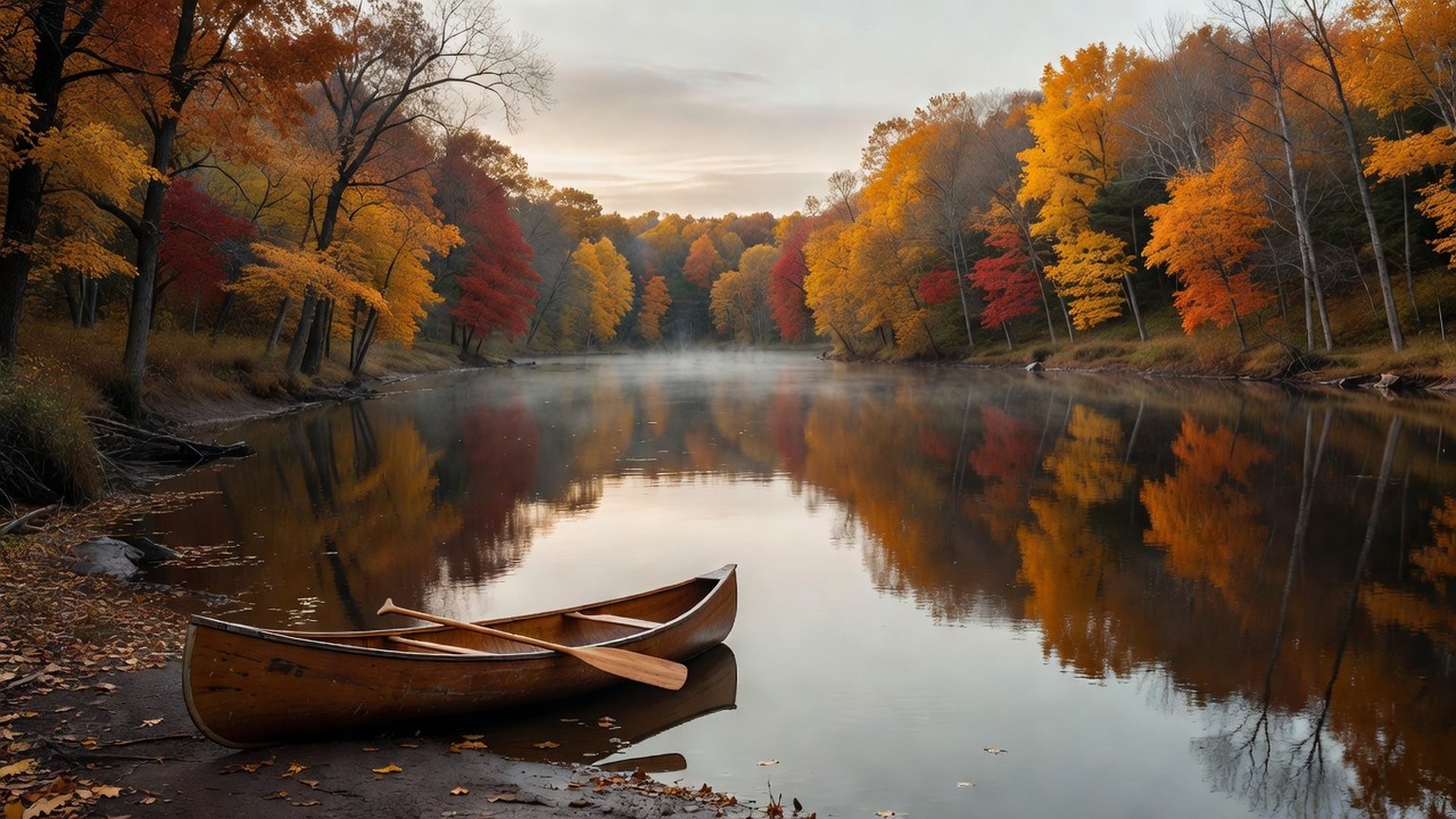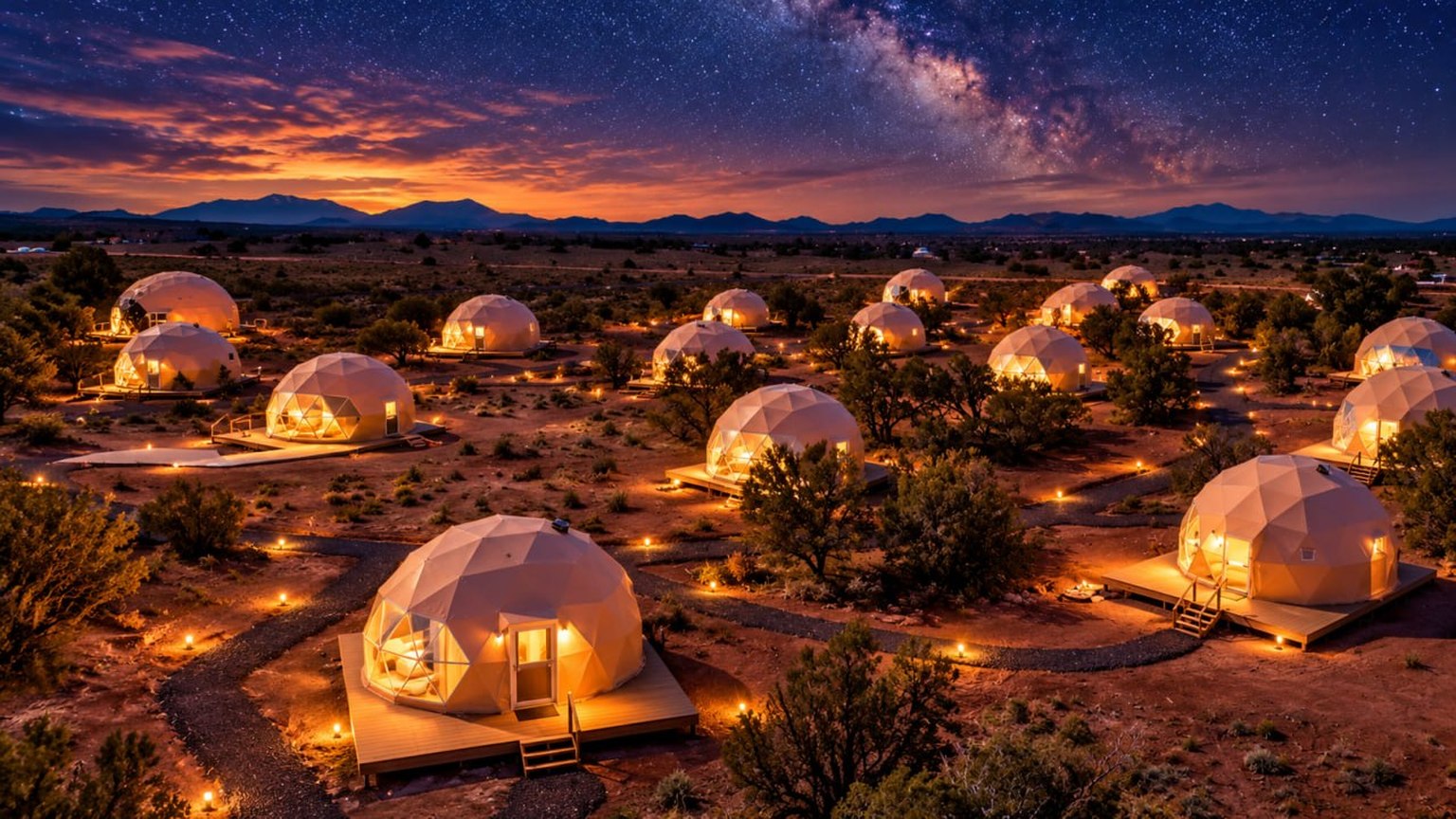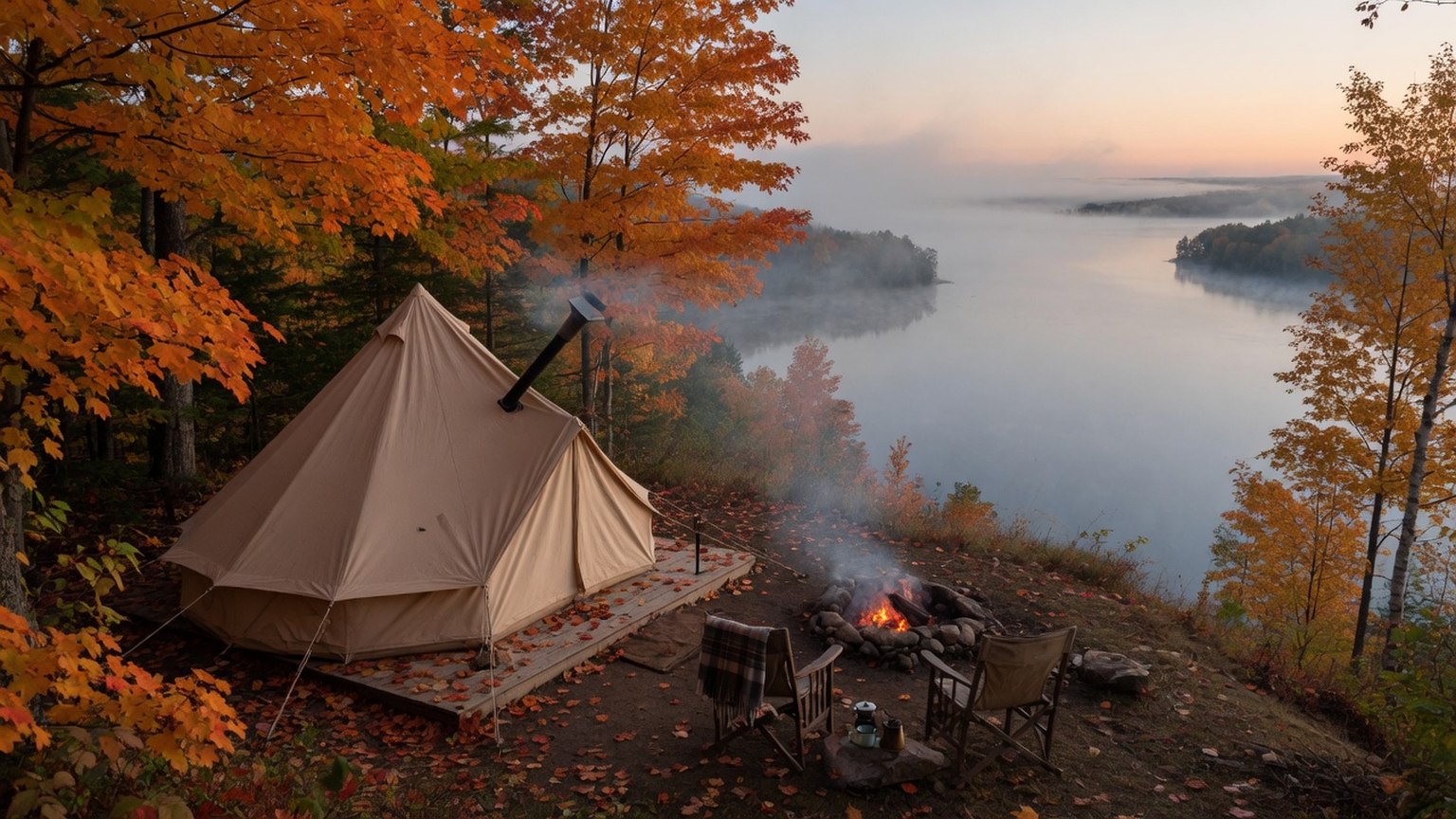
Fall color in the Upper Midwest is not one weekend. It is a slow-moving wave that rolls north to south across the Great Lakes, and the surest way to catch it at its peak is to camp inside the wave rather than chase it from a hotel parking lot. From the hardwood ridges of Michigan’s Upper Peninsula to the bluffs above Lake Superior, some of the most spectacular autumn scenery in the country sits within a short walk of a tent, a yurt, or a woodstove-warmed cabin.
The region rewards travelers who understand one simple rule: color arrives earlier the farther north you go and the higher you climb. That means the Upper Peninsula peaks while lower Michigan is still mostly green, and northern Wisconsin turns while Chicago is still mowing its lawn. Plan around that ladder and you can stretch one autumn into three separate weekends of color.
Why the Great Lakes Do Fall Color Differently
Three things make this region special in autumn. First is the tree mix: sugar maples, red maples, birches, aspens, oaks, and tamaracks all turn at different times, so a single hillside can hold orange, gold, and deep red at once. Second is the water. The Great Lakes act as a giant heat sink, moderating temperatures near the shore and often leaving a low morning fog that makes every ridge look like it belongs on a postcard.
Third is access. Public land is abundant here, from state parks and a national lakeshore to national forests, and much of it stays open to camping well into October. You do not need a permit lottery or a famous overlook to see something remarkable. A county road, a boat launch, and a two-track into the woods will usually do.
Michigan’s Upper Peninsula: Color Before Anywhere Else
If you want the first color of the season, start here. The Upper Peninsula’s cool nights and northern latitude push peak foliage roughly a week or two ahead of the rest of the region, which makes late September the sweet spot in most years. It is also gloriously uncrowded compared with New England in October.
The Porcupine Mountains and Lake of the Clouds
Porcupine Mountains Wilderness State Park, near Ontonagon, is the peninsula’s flagship autumn destination. The Lake of the Clouds overlook looks down on a valley of hardwoods reflected in a dark, still lake — one of the most photographed fall views in the Midwest, and deservedly so. Campgrounds and rustic cabins in and around the park fill fast for the last two weekends of September, so book early.
Pictured Rocks and the Keweenaw
Farther east, Pictured Rocks National Lakeshore pairs sandstone cliffs and turquoise water with maple ridges that turn gold overhead. The drive up the Keweenaw Peninsula, which juts into Lake Superior, is another classic: small harbor towns, copper-country history, and long views over water and woods. For a quieter version of the same experience, look at the campgrounds in the UP that sit on inland lakes and forest roads rather than the headline parks.
Lower Michigan: The Tunnel of Trees and Inland Lakes
As the color wave moves south, lower Michigan takes over. The Tunnel of Trees along M-119 near Harbor Springs is exactly what it sounds like: a narrow, canopy-covered road that becomes a tunnel of red and gold in early to mid-October. Combine it with a stay near Petoskey, Charlevoix, or Traverse City and you have a weekend of shoreline drives, cider mills, and farmers markets.
The state park system is one of the best fall camping bargains anywhere in the country, and many parks stay open into late October with far more open sites than in July. If you are planning around that window, our list of Michigan state parks is a good place to start, especially the ones on inland lakes where the reflection doubles the show.
For something less expected, consider an island. Beaver Island Retreat sits out in Lake Michigan, where the color arrives without crowds and the ferry ride itself is part of the trip.
Wisconsin and Minnesota: Lake Superior’s Two Shores
Wisconsin and Minnesota share one of the great autumn drives in North America: the loop around Lake Superior that locals simply call the North Shore. On the Wisconsin side, the Bayfield Peninsula and the Apostle Islands offer sea caves, orchards, and ridgeline views over the lake. Apple season overlaps with peak color here, which is a very good reason to build in an afternoon at a pick-your-own orchard.
Cross into Minnesota and Highway 61 runs northeast from Duluth along the shore to Two Harbors, Grand Marais, and the Gunflint Trail. Waterfalls, cobblestone beaches, and birch-and-maple slopes make that stretch worth several days. Inland, the lake country around Hayward and Cable offers quieter camping with the same palette. A small Midwest gem we like for a slower pace is Smokey Hollow Campground, where the whole point is a short walk to the water and a fire at night.
Where to Sleep While the Leaves Turn
Fall is the season when glamping earns its keep in this region. Nights near the lakes regularly drop into the thirties and forties by early October, so a canvas tent with a woodstove, a heated yurt, or a cabin with a real bed makes the difference between a great trip and a cold one. Look for these features when you book.
- Insulated or stove-ready canvas tents, or a cabin with heat — not a summer-rated three-season tent
- A fire ring and a reliable supply of dry firewood, which most campgrounds sell on site
- Electric hookups or a charged power bank for phones and camera batteries
- A short walk to water or a ridge view, since dawn is often the best light of the day
- Flexible cancellation, because peak color shifts with wind and rain every year
Layer up, too. A sunny October afternoon on the lakeshore can feel like summer, and the same evening can be cold enough for a hat and gloves. A warm base layer, a fleece, rain gear, and a headlamp for early darkness cover almost everything the season throws at you.
Practical Notes for a Fall Color Trip
Book early. Peak-color weekends in the Upper Peninsula and along the North Shore are the busiest two or three weeks of the fall for campgrounds and cabins, and the best sites go first. Midweek is dramatically quieter and often cheaper.
Watch the weekly color reports. State tourism offices and park services publish foliage updates every autumn. Use them to decide whether to drive north or stay south rather than locking in months ahead and hoping.
Respect the season. Stay on trails, keep campfires in rings, and carry out what you carry in. A leaf-strewn forest floor is dry fuel, so check local fire restrictions before you light anything. And remember that many campground water systems shut down for the season in October, so plan to bring your own or confirm what is still open.
Make It an Annual Tradition
The Upper Midwest’s fall color is generous. It lasts weeks rather than days, and it spreads across thousands of miles of shoreline, forest, and small towns. Pick one stretch this year, camp in the middle of it, and let the season set the pace. Cook something warm over the fire, walk a ridge at sunrise, and you will understand why so many families here mark the calendar by the leaves. Happy glamping.