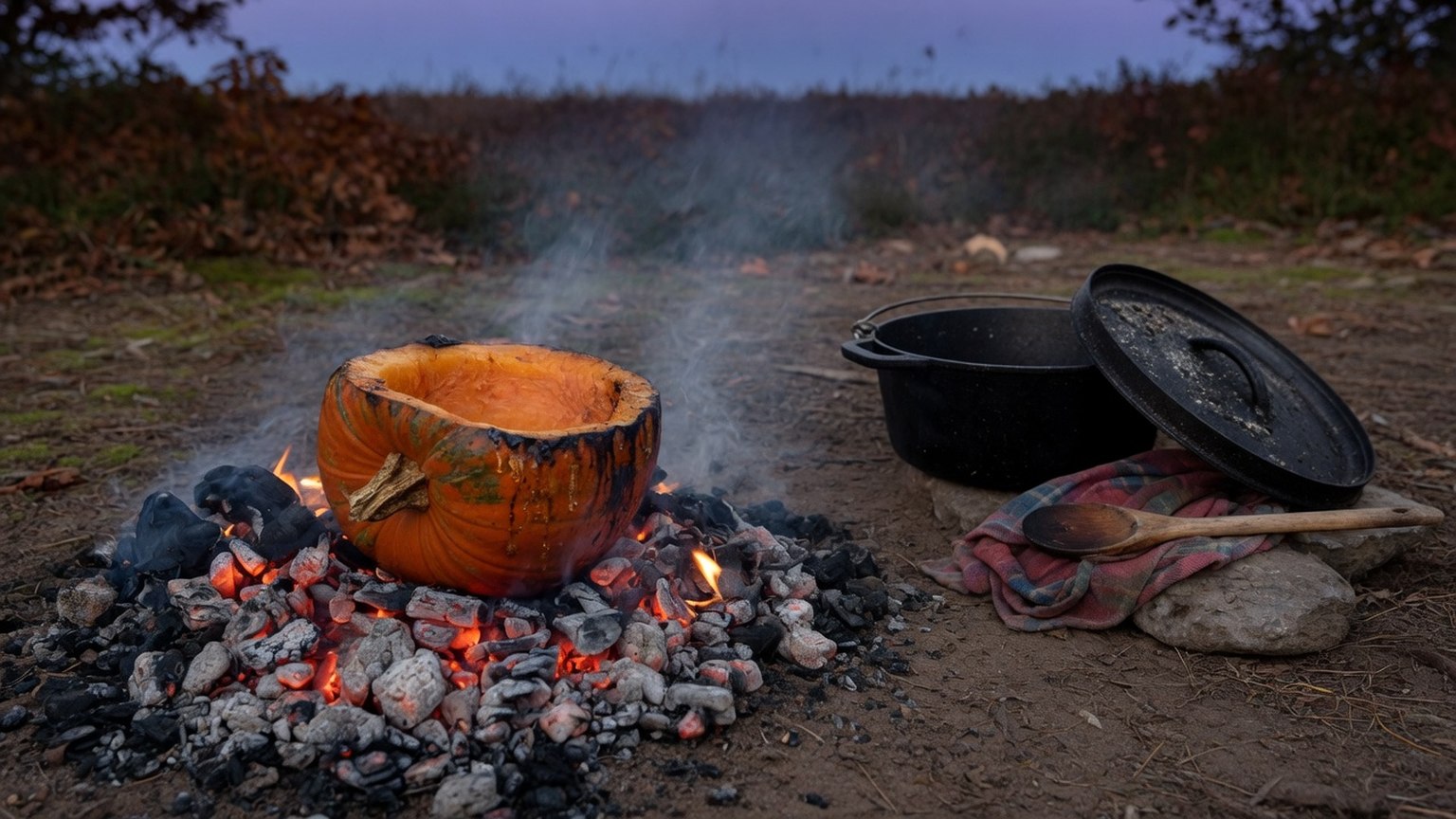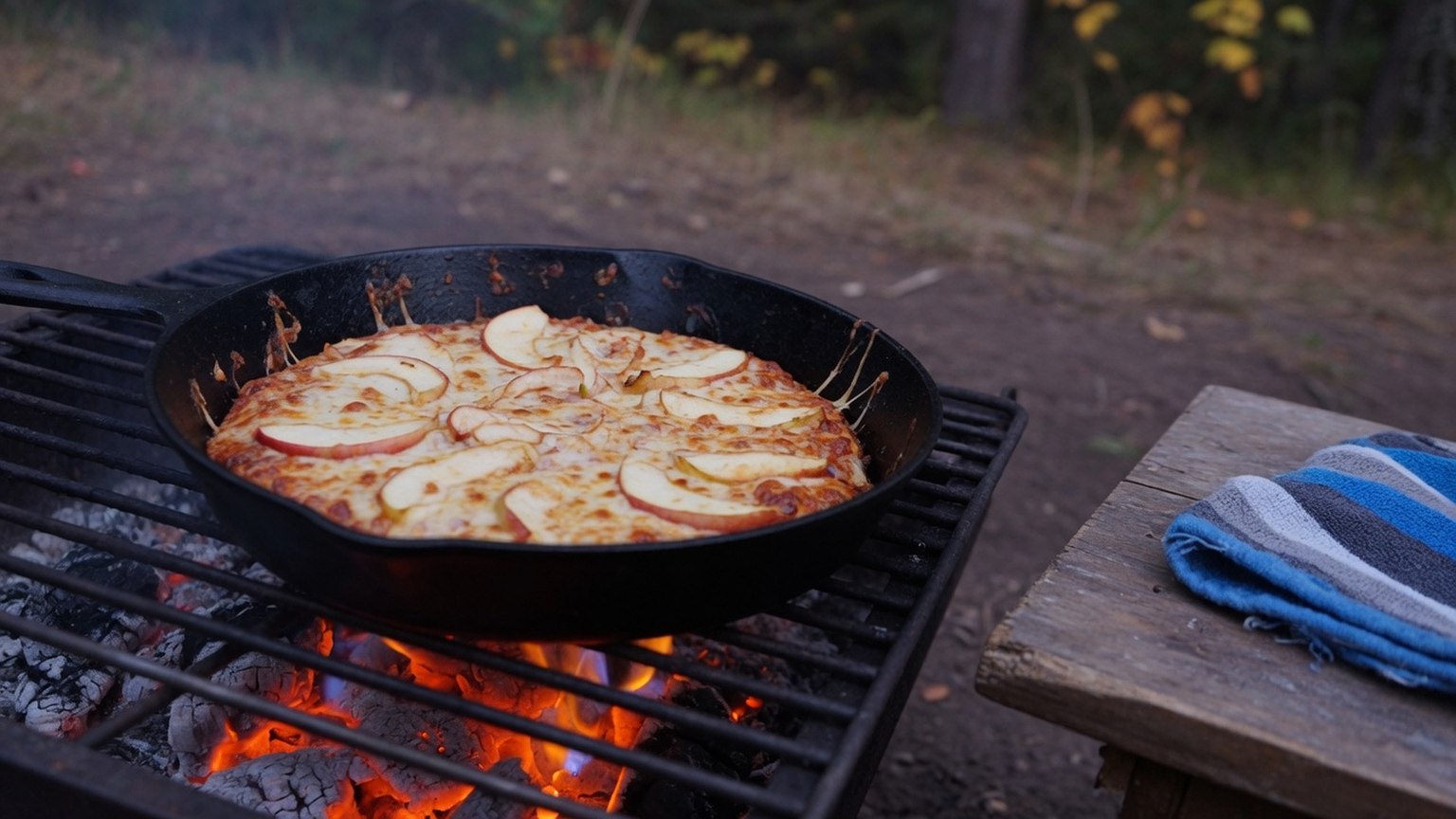
There is a moment on a fall camping trip when the whole site goes quiet: a ring of coals glows orange, the dough puffs and blisters, cheese melts into the crust, and the smell of toasted bread drifts across the picnic table. Campfire pizza night is the simplest way we know to turn a crisp evening around the fire into the best meal of the trip.
It is also one of the most forgiving dinners you can cook outdoors. The dough can be mixed before you leave home, the toppings ride in a single small bin, and the actual cooking takes a few focused minutes once the fire has burned down to coals. If you have only ever used your fire for hot dogs and marshmallows, pizza is the most satisfying next step — and a natural companion to the campfire baking we already love.
Why Crisp Evenings Are the Best Time for Pizza on the Fire
The fire is the whole argument. In July you are building coals for dinner in the middle of a heat wave; in late September and October the fire is already burning for warmth, so the coals come free. Cool air also makes standing over the fire pleasant instead of punishing, and it keeps the dough relaxed just long enough that a ball set out on the table still stretches easily by the time you are ready to cook.
Fall flavors suit a flatbread beautifully as well. Apples, squash, mushrooms, sage, and onions are all in season and all taste better with a little smoke on them. And because pizza is built one pie at a time, it solves the campsite food problem for good: picky kids get plain cheese, the adults get something with rosemary and blue cheese, and nobody has to negotiate over a single pot.
Start With Dough You Can Actually Trust Outdoors
The biggest variable is the dough, and it is the easiest one to control before you leave. A ball of store-bought pizza dough from the bakery counter works fine; so does a simple no-knead recipe made the night before. Either way, portion it at home into balls of about six to eight ounces — one per person, two if the crowd is hungry — rub each with a little olive oil, and pack them in a zip-top bag or lidded container with room to rise.
Keep the dough out of the cooler. Cold dough is stiff and springs back every time you try to stretch it. Set the bag on the table when you start the fire and it will be cooperative by the time the coals are ready. Bring a small bag of flour or cornmeal for dusting, and pack a thin flexible cutting mat or a sheet of parchment to stretch the dough on. If you would rather skip shaping entirely, shelf-stable flatbreads and pre-baked crusts are a legitimate shortcut — you trade a little chew for a lot of ease.
Build a Harvest Topping Bar
Treat toppings like a bar rather than a recipe and everyone ends up happy. You want three things: a sauce, a cheese that melts, and two or three toppings per pie. More than that and the center turns soupy.
Sauce can be crushed tomatoes with a pinch of salt and oregano, a spoonful of pesto, or simply olive oil, garlic, and salt. Draining matters — a watery sauce is the most common reason a camp pizza sags in the middle. For cheese, mozzarella gives you the stretch and something sharper gives you flavor; shred it at home and store it in a bag, because a whole block is awkward at a picnic table.
Toppings that hold up well in fall:
- Thinly sliced apple with sharp cheddar and a little rosemary
- Roasted squash or pumpkin with sage, fontina, and toasted nuts
- Caramelized onion and mushrooms, cooked ahead so they do not release water on the pie
- Crumbled sausage, roasted peppers, and a pinch of chili flakes
- Classic pepperoni for the traditionalists, plus sliced olives for the kids
One habit is worth more than any recipe: vegetables with high water content — fresh tomatoes, zucchini, mushrooms — should be sliced thin, salted, or cooked ahead. That single step is the difference between a crisp flatbread and a sad, floppy one.
Three Ways to Bake Pizza at the Campsite
You do not need a pizza oven. You need steady heat and something to cook on, and a campsite usually offers both.
The Dutch Oven Method
A twelve-inch Dutch oven with a rimmed lid makes a genuinely good pizza, especially when the coals are already banked. Set the oven on a ring of coals, press a stretched round of dough inside, and add sauce and toppings quickly. Put the lid on with a generous load of coals across the top and bake for roughly eight to twelve minutes, checking once at the halfway point. The lid traps heat from above, which is exactly what a pizza needs, while the bottom crisps against the cast iron. If the pot is new to you, our guide to camping with a Dutch oven covers seasoning, coal counts, and lid-lifter basics.
The Cast Iron Skillet Flip
A heavy skillet on a grill grate or a bed of coals gives you a crisp bottom in minutes. Press the dough into the pan, cook it for two or three minutes until the underside sets, then flip it and dress the cooked side. The second side needs only a few minutes more, and the result looks like a proper pizza with no peel required.
The Grill Grate or Foil Shortcut
If your site has a grill grate over the fire ring, you already have a pizza station. Oil the grate, lay the dough directly on it, and turn it once it firms up. Add the toppings and tent a piece of foil over the top to trap heat. This is the method to use with a crowd, because you can run two or three pies at once while the first ones are already being eaten.
Timing the Night and the Tools Worth Packing
Pizza night lives or dies on your fire, and the rule is simple: coals, not flames. Start the fire about an hour before you want to eat, let it burn down until the logs are glowing embers, then spread them flat. A charcoal chimney is a useful backup when wood coals burn low, and a pair of long tongs lets you shuffle coals under a skillet without singeing your knuckles.
The tool list is modest: a lid lifter if you are using a Dutch oven, heat-proof gloves, a small cutting board, a pizza wheel or kitchen shears, and one bin for toppings. Our own roundup of essential camp fire cooking equipment covers the rest of the kit. Set everything out on the table before the first pie goes on — once your hands are covered in flour, hunting for the cheese grater stops being fun.
The schedule we use: start the fire, set out the dough, build the topping bar, cook the first pie, then eat in shifts. Pizza is best hot, straight from the pan, and standing up.
Pie Iron Pizza and Other Ways to Stretch the Night
Pie irons are the underrated hero of a fall cookout. Two slices of bread with sauce, cheese, and a filling, pressed over the coals for a few minutes, produce a sealed pocket-sized pizza that kids can hold in one hand while they run around the site. Our collection of campfire pie iron recipes has plenty of fillings worth borrowing, and the same tool handles dessert.
Leftover dough does not have to go to waste either. Roll small pieces into flatbreads, brush them with oil and garlic, and toast them for dipping in the next morning’s coffee. Tossed with cinnamon sugar and cooked quickly in a skillet, they become a simple fireside treat after dinner.
Make Campfire Pizza Night a Fall Tradition
A cooler of dough, one bin of toppings, and a good bed of coals are all it takes to make a campsite dinner people request for the rest of the season. Start with two pies, learn how your fire behaves, and adjust from there — every campfire cooks a little differently, and the second pizza is always better than the first. Set out a lantern, pull up the chairs, and let the evening run long. Happy glamping, and happy eating.