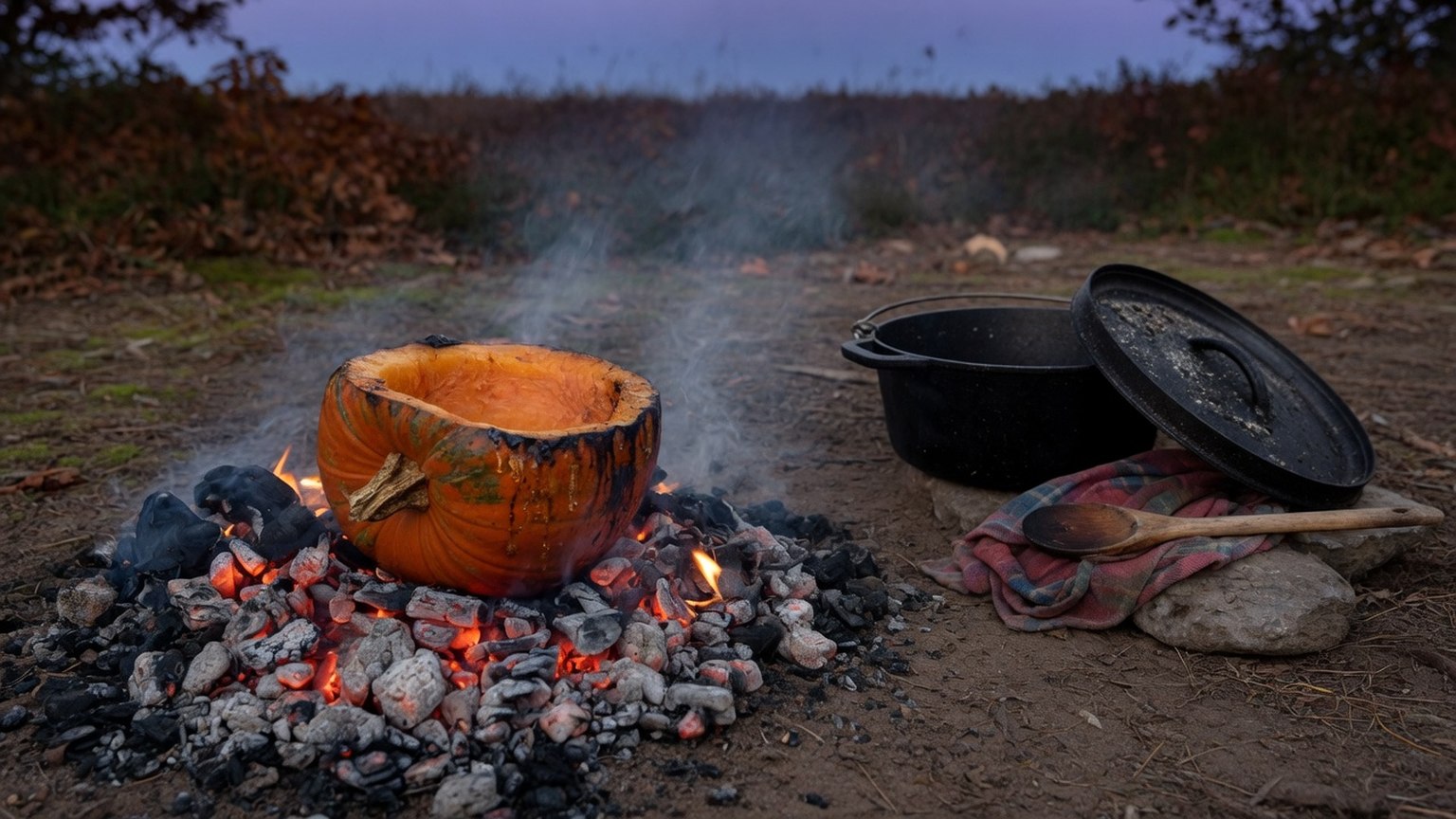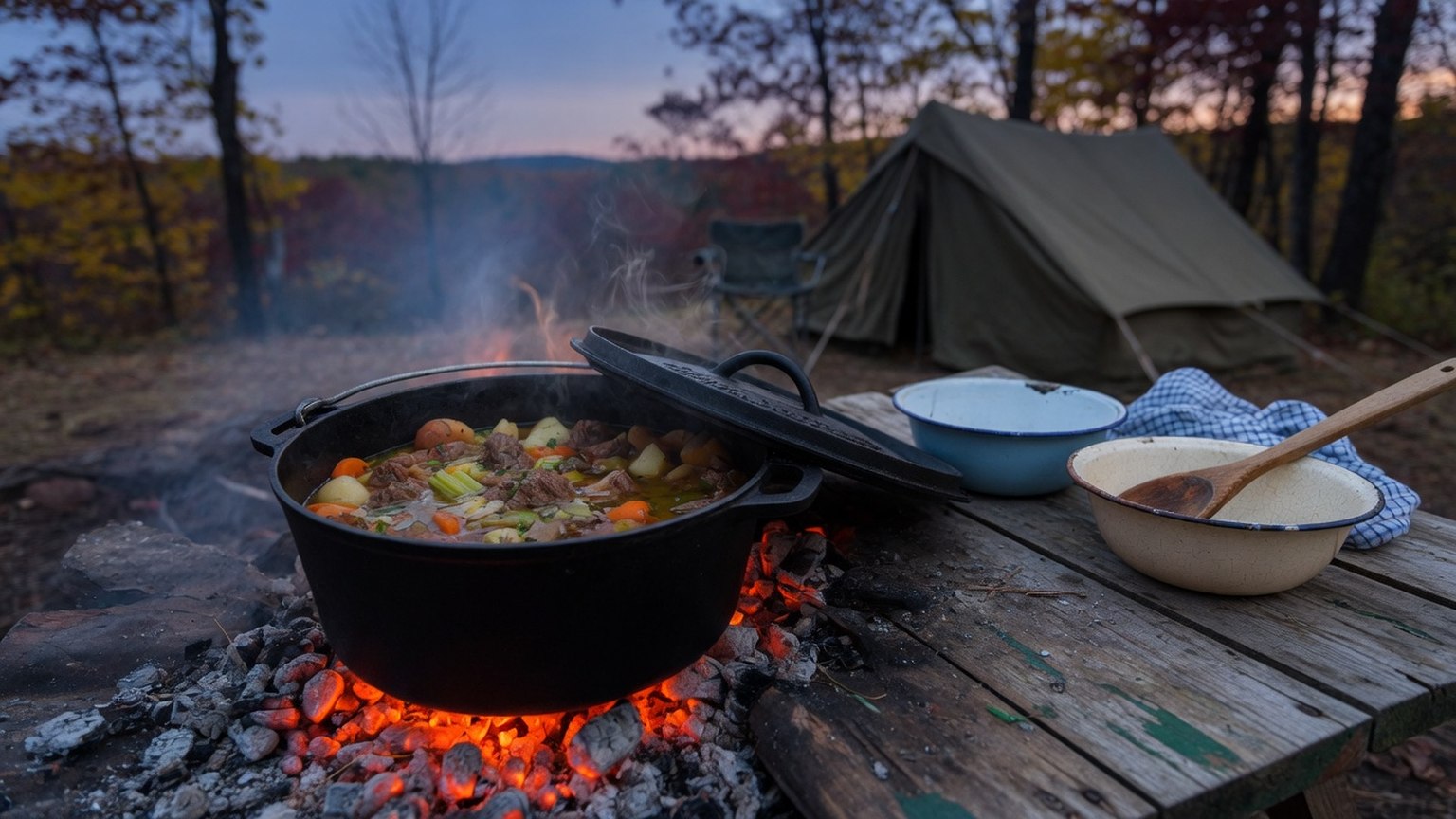
Something shifts in camp cooking when the first real cold front moves through. The grill suddenly looks less inviting, the salad gets passed over without comment, and everyone drifts a little closer to the fire. That is the moment the Dutch oven earns its keep. A heavy cast iron pot full of soup, set down in a bed of coals, keeps feeding people for hours while the sky goes dark and the lanterns come on.
Fall is the best season for one-pot camp meals, and it is not just about warmth. Cool air makes fire-tending comfortable instead of sweaty, root vegetables are at their sweetest, and slow-simmered food tastes better when the temperature drops. If you already own a Dutch oven, this is the season to use it every single trip.
Why Soup and Stew Belong in the Dutch Oven
Cast iron holds heat like nothing else in the camp kitchen, and that steady, even warmth is exactly what a long simmer wants. Unlike a thin camp pot that scorches the bottom the instant you look away, a Dutch oven spreads the heat across the whole base and keeps a gentle bubble going for an hour or more with very little attention.
There is a practical side too. Soup is forgiving in ways that a grilled steak is not. You can add ingredients as you think of them, stretch the pot with an extra can of beans or a handful of rice, and nobody notices if dinner lands twenty minutes late. Stew also gets better as it sits, which means the pot you start after lunch is genuinely better by dinner than it would have been at three in the afternoon.
And then there is cleanup. One pot, one wooden spoon, and a camp that smells like thyme and onions instead of burnt coffee. If you are newer to cast iron, our guide to cooking with a Dutch oven covers seasoning, sizes, and the basics before you build your first fire.
Dialing In Your Coals for a Slow Simmer
Soup does not want a hot, fast fire. It wants a moderate, steady coal bed, and the easiest way to get there is to think in terms of top heat versus bottom heat. For a simmer, put roughly two-thirds of your coals under the oven and one-third on the lid. Too many coals underneath and the bottom burns before the carrots soften; too many on top and you are essentially baking the stew instead of simmering it.
As a starting point for a 12-inch oven, arrange about fourteen coals in a ring under the pot and eight or nine on the lid. Every twenty minutes or so, give the oven a quarter turn and rotate the lid a quarter turn the other way. That small habit evens out the hot spots and is the single biggest difference between a great stew and one with a scorched corner.
Liquid levels matter more than temperature in my experience. Aim for a gentle blip rather than a rolling boil, and keep a small bottle of broth or water nearby to top off the pot. If the lid is heavy and you are cooking over real firewood coals rather than charcoal, plan on adding a few fresh coals partway through, because wood coals burn down faster than briquettes.
Three Fall Soups and Stews We Make Every Season
1. Smoky Beef and Barley Stew
Brown cubed stew meat in a little oil with the lid off, then add onions and cook until they soften. Stir in carrots, celery, pearl barley, a spoonful of tomato paste, and enough beef broth to cover everything by an inch. Add a bay leaf and a pinch of smoked paprika, put the lid on, and let it simmer for about ninety minutes. The barley thickens the broth on its own, so you never need flour or cornstarch at the campsite.
2. Chicken and White Bean Chili
This one is the crowd-pleaser. Cook diced onion and a couple of chopped poblano peppers in oil, add ground chicken or shredded leftover chicken, then stir in white beans, green chiles, cumin, and chicken broth. Thirty-five to forty-five minutes of simmering is all it needs, which makes it a good choice on a night when everyone is hungry. Finish it with lime and a handful of crushed tortilla chips, and serve it with the same toppings you would use for our Dutch oven camping tacos.
3. Squash and Sausage Soup
Fall squash is cheap, forgiving, and made for this pot. Brown sliced smoked sausage, add onion and cubed butternut or acorn squash, then pour in broth with a few sage leaves and a splash of cream at the end. Simmer until the squash collapses into the broth, about forty minutes. Mash some of the squash against the side of the pot to thicken it, and you have a bowl that tastes like the whole season.
What to Pack Alongside the Pot
Good soup is a two-part meal: the pot, and everything you dunk in it. Packing list shortcuts that save us every fall trip:
- A loaf of crusty bread, wrapped in foil and warmed on the coals for ten minutes
- Cornbread batter mixed at home in a zip bag, cooked in a second small oven or a covered skillet
- Hard cheese, crackers, and apples, so there is something to eat while the pot simmers
- A wide-mouth thermos for anyone who wants a second bowl after the fire dies down
- Real bowls, not paper, plus a ladle you can find in the dark
The rest of your kit matters too. A lid lifter, leather gloves, a folding trivet for the hot pot, and a stiff brush for cleanup turn a fussy dinner into an easy one. Our roundup of essential camp fire cooking equipment covers the tools worth carrying, and if you like the idea of arriving with dinner already half done, these make-ahead meals for RV camping pair well with a Dutch oven night.
Cleanup, Storage, and Cast Iron Care
Let the oven cool until it is warm rather than hot, then scrape the sides with a wooden or plastic spatula and wipe it out with a paper towel. For most soups, hot water and a stiff brush are enough; soap is not the enemy people make it out to be, but it is rarely necessary either. Dry the pot thoroughly over low heat, rub a thin film of oil inside, and it is ready for the next trip.
Store the oven with the lid slightly ajar or a folded paper towel between the lid and the rim, so air can move and condensation cannot start rust. Fall camping means cool, damp nights, and a little prevention now saves you a re-seasoning session later in the season.
Make It a Fall Tradition
Start with one pot of soup on your next cold-weather trip, and you will notice something: the meal stops being a task and becomes the center of the evening. People linger, bowls get refilled, and the conversation lasts longer than the fire does. That is the whole point of a fall camping kitchen. Bring the cast iron, keep the coals steady, and let the pot do the work. Happy glamping, and happy eating.