Ask ten glamping owners what it cost them to open and you will get ten different answers, because the number depends far less on the tents than on the land beneath them. What does not vary is the shape of the budget: a handful of large, unavoidable line items, a long tail of smaller ones, and a stretch of spending that happens long before you collect a single booking. Understanding that shape is the difference between a project that survives its first season and one that runs out of money halfway through the build.
Why Your First Estimate Is Always Too Low
New owners budget for the visible thing — the tents, the cabins, the yurts — and forget the invisible infrastructure that makes those structures usable. A canvas tent that sleeps four is the cheapest part of the site it sits on. Before a single guest arrives, money disappears into the ground, the utilities, the paperwork, and the furniture inside the tent.
A practical habit: take your honest estimate, add a contingency of ten to twenty percent, and treat that contingency as spending you fully expect to make. Grading a site always uncovers something. A permit always asks for one more thing. The owners who get hurt are the ones who spend their contingency on upgrades in month two.
Land: Buy, Lease, or Borrow
Land is usually the largest single line and the one you can control most. Buying outright gives you the lowest long-run cost and the highest upfront one, plus property taxes and the risk that the land never performs. Leasing keeps your capital free for the build but ties you to a landlord, a term, and the real possibility of a rent reset once you have proven the site works.
Either way, price the land for what it can actually host. Usable acreage is not the same as total acreage: slopes, wetlands, easements, and setbacks all quietly remove buildable area. Walk the property with someone who knows local land before you commit, and confirm what you are allowed to do with it before you fall in love with it.
Site Preparation: Where the Big Iron Shows Up
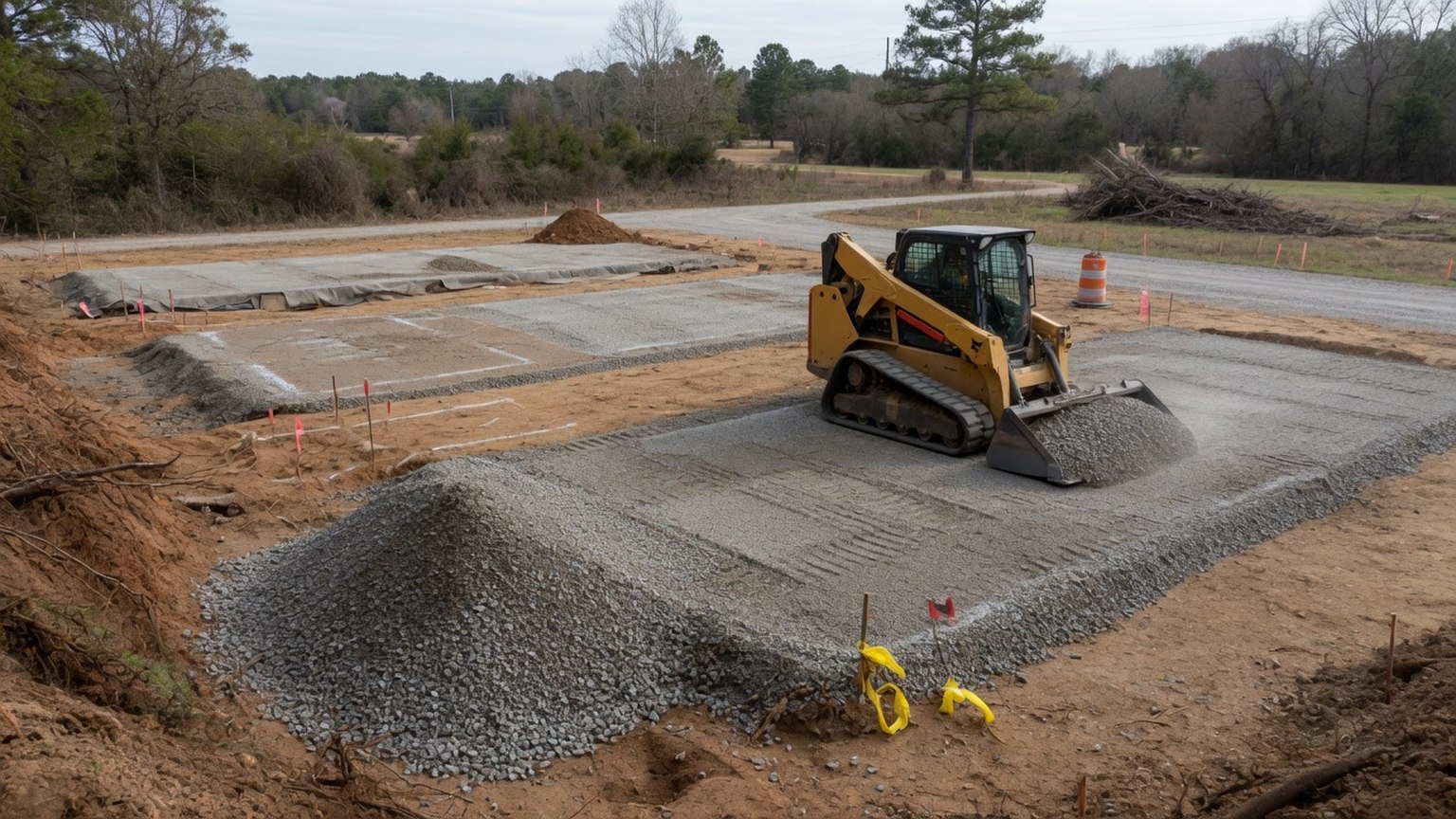
This is the stage guests never see and owners never forget. Turning raw ground into bookable sites means clearing brush, cutting level pads, running driveways, and managing water so your sites do not become mud pits. A skid steer or compact track loader shaping an RV pad is the picture of this phase — grading, compacting, and hauling gravel in a loop that repeats for every site.
Budget for the work, not just the machine: excavation and grading, gravel or crushed stone base, culverts and drainage, retaining where the ground falls away, and the vegetation you have to remove. Add a second pass for the things nobody plans for, like a soft spot that swallows gravel or a spring that appears after the first heavy rain.
Accommodations: The Structure Itself
Once the pads exist, the tents, cabins, yurts, or converted trailers go in. Costs climb quickly with the level of construction: a platform and a safari tent sit at one end of the range, a framed cabin with plumbing and climate control at the other. What does not change is the accessory cost per unit — foundation or decking, anchoring, a wooden floor, a front porch, and the interior fit-out that makes the space feel finished rather than tent-like.
Think in cost per site rather than cost per tent. Two structures that look identical online can differ enormously once you add the deck, the access path, the fire ring, and the parking spot that every guest expects.
Utilities and Infrastructure
Utilities are the line item that surprises owners most, because remote land is remote for a reason. Depending on the site you may be looking at a well and pump, power brought in or generated on-site, septic or a vault-and-haul arrangement, propane, and internet that actually reaches the tents. Each of those is a design problem before it is a purchase.
Get quotes early, and get them for your specific parcel rather than the general area. Distance from the nearest power line, soil depth for a septic field, and the water table all move the number, and they move it in one direction only.
Permits, Zoning, and Insurance
This is the least glamorous part of the budget and the one most likely to stop your project outright. You will need to confirm what your local jurisdiction allows on the land — zoning, conditional use, building permits, health department requirements for water and waste, and fire access rules. A site that cannot be permitted is worth nothing, no matter how beautiful it is.
Insurance deserves its own line. Operating a hospitality business on rural land is not the same risk as owning vacant acreage, and a standard property policy will not cover guests, structures, or liability. Ask an agent who writes hospitality policies, and factor in the annual premium as an ongoing cost, not a one-time fee.
Furnishings, Supplies, and Booking Software
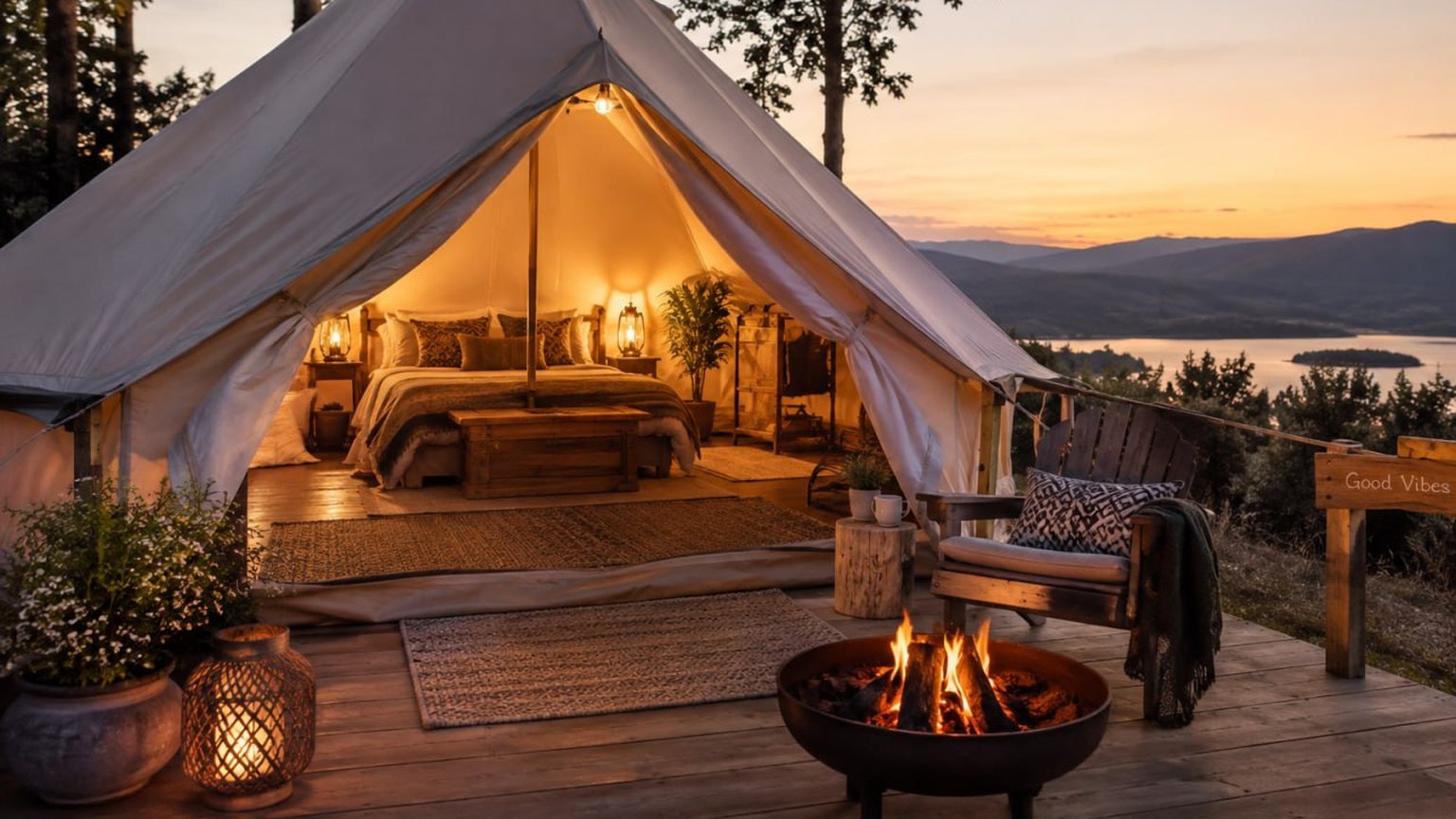
Furnishing a glamping unit is closer to furnishing a small hotel room than kitting out a campsite. Beds and linens, seating, lighting, cooking equipment, outdoor furniture, a fire pit, and the small comforts guests now consider standard all come per unit, multiplied by the number of units you build. Then come consumables — soaps, towels, coffee, firewood, welcome items — which reset with every stay.
Booking software is the smallest line and one of the most important. A channel manager and booking engine, a payment processor, an email tool, and a review platform are modest monthly costs individually, but they compound. The trade-off is worth it: good software prevents double bookings and takes the reservation load off your phone, which is time you cannot buy back later.
The Ongoing Costs Nobody Warns You About
Startup money gets you open. Operating money keeps you open. The recurring costs that bite are turnover labor for every stay, replacements and repairs (fabric, mattresses, and outdoor furniture age faster than anyone expects), grounds maintenance through every season, platform commissions on bookings that arrive through marketplaces, marketing, and the property taxes and insurance premiums that arrive whether or not the tents are full.
Model those before you build, not after. If your pricing does not cover turnover labor, replacements, and a slow winter, no amount of summer occupancy will save the season. Our guide to starting on a limited budget covers how to phase a build so the cash lasts.
How to Build a Budget You Can Trust
Build the budget from the ground up and in the order the money is actually spent: land, then site preparation, then utilities, then structures, then compliance, then furnishings, then software and marketing. Get real quotes for the first four instead of estimates, because those are the lines that cannot be trimmed later.
Then stress-test it. Ask what happens if site preparation runs long, if a permit takes an extra season, or if you open with half the units you planned. A sound plan survives all three, and a plan that only works when everything goes right is not a plan. Most owners also find that local partnerships and a careful read of how to open a glamping business shave real money off the later stages.
None of this is meant to scare you off. It is meant to make the first year calmer than the horror stories. Know the shape of the spending, keep a real contingency, and the build becomes a project you can actually manage. Happy glamping — and happy building.